Class politics is the answer to tribalism, not tired cliches
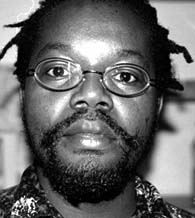
The long awaited, first ever presidential debate for aspiring candidates in Kenya is over, opening the way for analysts and commentators to stream in with their takes on the debate. Muhammed Abduba, Paul Muite, Raila Odinga, James ole Kiyiapi, Peter Kenneth, Musalia Mudavadi, Martha Karua (the only woman candidate) and Uhuru Kenyatta, all had their say in a live transmission estimated to have been watched by about 40 million viewers, majority of them Kenyans. By Kenyan and Third World standards, the debate was a big step forward in Kenya’s electoral politics while the event also represented an obvious advance in the country’s democratic struggle.
However, in terms of issues that were discussed in relation to the quality of responses that were given by the candidates, the historic debate was the ultimate proof that Kenyan politicians aspiring for the highest office in the land are fundamentally clueless about what needs to be done to sort out the mess that has stagnated the nation since independence more than 49 years ago. An examination of some of the key issues tackled reveal that the answers given by the candidates were embarrassingly the same, inadequate and, sometimes, off the mark. In this instalment, an examination of the thorny issue of tribalism and how to end it could illustrate this point.
On this issue, which was the first to come up, the line of response of all the candidates was along “equitable distribution of wealth”, “equity in allocation of resources”, “equalize development in all areas”, “an all-inclusive government”, “implementation of the Constitution” “an audit of the civil service” among other tired clichés. Why were these answers wanting?
Tribalism is not rooted in lack of equitable distribution of resources in Kenya. It is rooted in a neo-colonial ideology inculcated in the psyche of Kenyans by British colonialists who used this ideology to divide and rule Kenyans. Today, this ideology persists because it has been handed over from generation to generation by the rotten capitalist ruling class which has been using it to achieve the same objectives of dividing Kenyans in order to rule them. The existence of ethnic voting blocs benefits politicians who use these blocs as bargaining chips during their wheeling and dealing especially during electioneering.
If say “equal distribution of resources” were a solution, the implication is that there has been an “unequal distribution” of these resources to members of ethnic groups whose ethnic chieftains have been in power. In short, it should mean that members of the Kikuyu and the Kalenjin (through Kenyatta, Moi and Kibaki) should have been well-off compared to other Kenyans from other ethnic groups. The reality is that majority of Kenyans (in their millions) are languishing in poverty regardless of whether or not members of their ethnic groups have resided in State House and this is how the situation will remain if Kenyans do not wake up to understand the problem of tribalism from a different angle.
Under the deformed condition of the capitalist system in Kenya (which all political parties contesting elections adhere to), there is no mechanism for distributing Kenya’s wealth and resources equally among all Kenyans regardless of the propaganda being used in the situation. Such a method of distribution only exists under a Socialist system. The method of “devolution” being cited by politicians will never trickle down to benefit the poor unemployed Kenyan and here, a good example is Constituency Development Fund system which failed due to corruption.
What will happen is that the devolved system at the County level will suffer the fate of CDF funds and eventually, millions of Kenyans will begin to wonder where the money has disappeared as they continue to starve to death. A lot of rhetoric could be at play but what is known is that under capitalism, the ruling class accumulate wealth endlessly at the expense of the poor thereby contributing to the ever widening gap between the rich and the poor. Ending tribalism in Kenya will be impossible if the system cannot be changed and the ideology of capitalism under which tribalism thrives is replaced by Democratic socialism.
If the ruling class can gang up, Workers and the poor can also gang up to seize power
To end tribalism, a political party that seeks to lead workers to power will have to surface. There are over ten million workers in Kenya and such a party will have to be armed with a clear Political program aimed at improving the working conditions of workers while at the same time addressing the issue of starvation wages in Kenya which has repeatedly seen workers from different sectors across the country resort to strike actions as a way of protest.
Such a party will also have to appeal to the army of unemployed youths who are tired of living in poverty and who are looking for a way out of their frustrations. This party will have to appeal to millions of students and peasants by introducing politics geared towards mobilization of poor Kenyans against the rich wealth gabbers who use tribalism to divide the poor. In simpler terms, the problem of tribalism can only be ended through class politics as opposed to ethnic politics which, at times, threaten to plunge the country into war.
A good example of class politics at work in Kenya and where tribalism has been defeated repeatedly is during those moments when Teachers, Doctors, Nurses or University Lecturers resort to strike action to force the ruling class to address their grievances especially on the issue of starvation wages. During such moments of struggle, the affected workers usually lay down their tools as aggrieved workers seeking redress from their bosses or government, not as members of different ethnic groups. Presdient Kibaki, a Kikuyu, has been in power for a decade but during strike actions by say Doctors, all Kikuyu Doctors have always showed up in the streets along their Luo, Luhya, Kalenjin, Masaai and Kamba counterparts.
If the thieving ruling class can gang up by exploiting “ethnic voting blocs” as bargaining chips, workers can also gang up and link with other exploited layers in Kenya to seize power. The reason why Kenyans have not yet reached this stage in the democratic struggle is because class politics has not yet attracted the attention of the electorate. The obstacle is that political parties in the market place are all selling capitalist ideas based on maintaining the capitalist system as it is.
A workers’ government is at the best position of distributing the national wealth equally because this wealth is produced by these workers. Revenue that runs Kenya and which is supposed to be distributed is collected through taxation but the key problem is that currently, the creators of wealth (workers) are not involved in its distribution, a responsibility which has been taken over by the vulture class through an election process in which there is no Party that represents the interest of the creators of wealth.
Once Kenyans begin to see themselves as members of different classes, and once a party is in place to represent their interest, tribalism will die a natural death because politically speaking, any Kenyan walking the streets is either a worker, a student, jobless, a peasant, bourgeoisie, petit bourgeoisie or a member of the ruling class (vulture). These are the key “economic tribes” in Kenya, a reality that is unavoidable.
The ruling class (mavulture) are already united in their quest for power while they even set up Coalitions and Alliances at every election in order to conspire on how to loot the economy once they come to power. Both the bourgeoisie (owners of capital) and the petit bourgeoisie also deal in business for mutual benefit regardless of their ethnic origins because they speak the same language of money. Mega corruption scandals occur because this class usually conspires with mavulture to loot the tax payer’s money through dubious contracts.
The task (for Kenyans interested in the Socialist revolution which is still at the discussion stage) is to unite the worker, the student, the unemployed and the peasant against the ruling class and their collaborators. This is what class politics (the answer to tribalism) is all about. It is not rocket science.
During the just concluded Presidential debate, the vulture class sought to convince Kenyans that it will end tribalism by distributing the carcass equally to every mwananchi once it gets to the eating table. This has never happened anywhere in the world where mavulture are in charge and it is not about to happen in Kenya. The vulture solution to tribalism in Kenya is therefore dead and buried.
Okoth Osewe
Secretary General
Kenya Red Alliance (KRA)
About the Author


Monday, May 12, 2008
Raila Outwitted Mt. Kenya Mafia
Politically Raila is equal to Mwai Kibaki. Constitutionally Kibaki is head and shoulders above Agwambo, but only as a figurehead. Governmentally they paddle in the same canoe. This is the position Kenya is in today because of Raila’s ability to outwit the Mount Kenya Mafia, which has been constantly stabbing him in the back every time he comes to some agreement with Mwai Kibaki. Raila has learnt how to deal with the Gema sharks after a bitter lesson that threw him out of governmental powers in 2005 though he still remained politically very powerful.
This is not the first time Kibaki and Raila have established a political agreement. When they made the first attempt before the 2002 general elections, they signed the now infamous MoU which created the post of an Executive Prime Minister for Raila. The many political parties that formed Narc to oust Kanu from power were to be guided by the Summit made up of Moody Awori as its chairman and George Saitoti, Raila Odinga, Kalonzo Musyoka, Kipruto arap Kirwa, Charity Ngilu, Mwai Kibaki and Michael Wamalwa as its members.
If the Summit was not dissolved by the Mt. Kenya Mafia soon after Mwai Kibaki was first sworn in as the third President of Kenya, the chances would have been the current strong coalition Government would have been established as long ago as 2003. The Narc Government would have grown into the kind of a Grand Coalition we have today. But the Gema leaders around Mwai Kibaki would hear nothing about the Summit. They also did not want the Constitution changed to create the post of a prime Minister despite the existence of the MoU.
Political animosity between Raila Odinga and the Gema group around Mwai Kibaki started at that time when a handful of extremely rich people from Central Province claimed that the Summit could not be above the Cabinet. At hat time John Michuki, who was the Minister for Transport and Communication, said the Summit should be dissolved because its continued existence undermined the Presidency. His son in law, who was the Mukurwini MP, Mutahi Kagwe, said there was no need for constitutional changes because Mwai Kibaki should be allowed to continue ruling Kenya for five years under the old constitution which made a demigod out of the President.
In an article published by The Standard on April 5th, 2003, I condemned the statements by the two and said: The statements by these two leaders are in poor taste and contribute to a public disservice which threatens the unprecedented co-operation and unity among Kenyan leaders that made Narc win the elections.
The perilously arrogant statements from the Central Province MPs resembled the conceited Kanu braggadocio which led to its downfall. The people could then see that the statements by Gema leaders were an uncomfortable blend of power hunger and disregard for wananchi’s feelings which were not a particularly appealing combination. Wananchi, who backed Narc to remove Kanu from power, could at that time see that things were not shaping up as they expected. There were practical and moral problems embedded in the Narc crisis. What seemed to bother most Kenyans at that time were the new jingoistic Mount Kenya Mafia’s ways of interpreting events even when their methods went against the moral and honest spirit of co-operation between political leaders from all corners of the country.
Naturally, there were serious practical hurdles to jump before the clique’s ambition could be fulfilled. If they needed to remain in power they had to be supported by the majority of Members of Parliament who at that time did not seem to be delighted by the trend to have Gema people dominate in almost all important Government positions. Indeed the entire political scenario put the power clique around Kibaki out of balance as it was typified by parliamentary rebellion which forced the government to withdraw some vital Bills from the order paper.
To many people the vitriol spewed by Michuki and Kagwe showed they harboured political ambition which was occasionally unleashed by recklessness in their speech. Wananchi were eager to see which of the Narc leaders would have the decency, integrity and honour to uphold the unity among the people and which ones among them would exhibit a diminutive mentality that would disregard human decency that required them to honour promises made to the masses of Kenya.
The squabbles in Narc proved that the Government was not functioning the way the coalition expected it to and many Kenyans were surprised when there was not even a time line on how the new party was to be reorganized. The failure of the Summit to meet and sort out Narc problems had influenced opinion right across the country in such a manner as to threaten to erode the goodwill they had so far succeeded to establish. To many Kenyans the objective of a few people around Kibaki was not only to accumulate power but to hijack Narc – a political task they could hardly achieve without the co-operation of the Summit.
It was obvious that the Narc coalition was so much concerned about winning the 2002 election that it paid little attention to post-election settlements. Little did anyone suspect that the Mount Kenya group would run the show after victory. But if that regime was to survive the crisis it was going through then it had, as much as possible, to involve all the original leaders of Narc. Wananchi wanted to see a hybrid administration running the country when the people were engaged in the process of reshaping the constitution along the lines recommended by Prof Yash Pal Ghai.
Ghai had created a constitutional revolution and made Kenyans ponder the question of governance. With every appointment announced by Kibaki, therefore, came an elaborate collection of ethnicity data by the people. This was done to enhance an early identification of any tendency of favouring any group. Among other things, the evaluation proved that the people who had in the past vehemently opposed Raila Odinga’s leadership in Nyanza were favourably considered by Kibaki’s administration for top jobs. These included Ndolo Ayah, who had always been a staunch Kanu supporter, and Dr Shem Ochuodho, who had refused to follow Raila in his short association with Daniel arap Moi’s Kanu. This also proved Kibaki did not rely on Raila’s guidance in appointing people from Nyanza to high government positions. Kibaki’s unilateral appointments were of course protected by the constitution but in some quarter they were seen as a failure in democracy as they hijacked the collective responsibility of the Narc Summit.
It seemed that what was then euphemistically known as the ‘Six-Ms’ and other close friends of the President did not understand how angry wananchi became when they saw a concentration of members of one ethnic group in top public offices. The battles between factions in Narc never ended when leaders continued to look at all appointments from an ethnic point of view. And the fight was intensified when the constitutional conference began.
Yet this game of ethnic favoritism was started by Jomo Kenyatta himself, and then perfected by Daniel Moi. People hoped it would be ended by Mwai Kibaki. But the country was shocked during Kibaki’s first term to see the appointment of elders of questionable modern management skills getting very important jobs. The new bosses almost all came from around Mt. Kenya. This made the Bomas constitutional conference think more of devolution of powers through a prime minister rather than supporting a strong unitary government under a powerful president. The country was run by an administration that had so many differences within it. The appointment of friends of the President to important positions also created a big split within Narc.
So when Kofi Annan came to Kenya to mediate peace following the post election clashes of last year, Raila had the hindsight of what really went wrong with Narc. This time he made sure the position of a Prime Minister was not only made into a statutory law but also incorporated in the Constitution itself. In that way he really outwitted the Mt. Kenya Mafia.
Joe Kadhi
Uhuru Kenyatta’s response circumvented the reality of tribalism, which his father promoted and he is now cementing, having been crowned the Muthamaki of Kikuyus by Michuki and other chieftains. He is a direct beneficiary of Mutahi Ngunyi’s “Tyranny of Numbers” hypothesis, which was fully supported by his TNA chairman Johnson Sakaja, in a debate at Citizen TV last week.
Without grading the presidential candidates, I can say that some were totally clueless, while what could not be hidden was the animosity of all the Kikuyu candidates towards Raila, through baseless accusations. Take Muite’s careless jab at him that having been a presidential candidate in 2007, he should be at the ICC. As a lawyer, where was Muite during the ICC investigations and the eventual handing over of the now (in)famous “Envelope” to Kofi Annan? Former ICC prosecutor Moreno Ocampo made it clear that Kibaki and Raila had POLITICAL differences but the Ocampo Four, were the main suspects of CRIMES against humanity. Muite’s remarks were inflammatory.
Karua was equally hostile with allegations that the two principals, (she looked at Raila), did not do much to marshal their MPs to fight for a local tribunal instead of the ICC. That was unfair because records indicate it was Ruto who marshaled Kikuyu and Kalenjin MPs not be vague and go to The Hague. There was a light moment when Raila told Uhuru that he foresaw the challenges ahead of him and wondered whether he could rule Kenya via Skype, while battling the ICC juggernaut. Uhuru had no clear answer on the ICC matter.
Mwalimu Abduba Diba represented Wanjiku well and had very interesting philosophical points. He was raw and asked why a clerk would normally be suspended from work pending investigations in case of misconduct, yet Uhuru stayed as Deputy Prime Minister despite the ICC accusations. Even though Uhuru stated that he was gunning for an elective post and not an appointed one, he missed the point of moral and ethical responsibility. Moreover, he was appointed by Kibaki as DPM, which is not an elective position.
Aside from inter-personal differences, responses pertinent to the well-being of Kenyans were like a refrain from the same song, save for slight differences in what the candidates’ party manifestos spelled out. Earlier before the debate, a panel of experts in the studio agreed that Kenyan politicians used political parties as vehicles to propel them to power. They switched them at will just as their so-called party manifestos were nothing but political pledges/promises to Kenyans, since they had no ideologies.
Overall, the presidential debate was a good start, being the first one ever in Kenya. In particular, it was food for thought on very broad issues; a platform to sober up the electorate who should see that politicians are in their own class and are not worth slashing each other to death for.
Kenya hosts first televised presidential debate
Clar Ni Chonghaile in Nairobi
The Guardian, Tuesday 12 February 2013
One by one, to the sound of polite applause from a select audience, the seven men and one woman who want to lead Kenya for the next five years walked on to a wide stage in a private school near Nairobi’s national park, ready to make history in the country’s first televised debate.
Moderators Julie Gichuru and Linus Kaikai, both television journalists, asked the candidates to take their positions behind the podiums and to briefly introduce themselves.
It was a polite, somewhat halting start to a three-and-a-half-hour marathon that gave Kenyans a chance to judge their prospective leaders on their words and policies rather than on who they are – a rarity in a country where politics has traditionally been intertwined with tribal identity, and where politicians often campaign on an “us versus them” platform.
Beyond the walls of the ornate Hogwarts-esque Brookhouse International School, millions of Kenyans were watching on television, listening to their radios, or following the live stream on YouTube.
On Twitter, where Kenyans are the second most active users in Africa, people immediately began tweeting quotes and impressions, making the debate one of the world’s top trending topics.
“Tonight has been good – we were united thanks to the debate,” tweeted one man, reflecting a sense of pride among many Kenyans commenting online.
If the debate was widely perceived as a positive political milestone, the civil and polite tone seemed worlds away from rising concern that Kenya may be heading for a repeat, or worse, of the politically motivated tribal violence that exploded after the last presidential vote in 2007 and that claimed around 1,200 lives.
More than 14 million Kenyans will go to the polls to elect a president, MPs and county representatives on 4 March in an election that is one of the most complicated and crucial in the 50 years since Kenya achieved independence in 1963.
If no one wins more than 50%, there will be a second round run-off in April. Observers have warned that there is a risk of violence if the vote is tight, or if there is doubt about transparency of process.
Veteran journalist Kaikai showed his combative form with his first question, asking the candidates to talk about the role of tribalism in politics, and pressing the two frontrunners – deputy prime minister Uhuru Kenyatta and prime minister Raila Odinga – on perceptions that their campaigns were exploiting traditional tribal animosities.
The two men are members of Kenya’s premier political dynasties, and their rivalry mirrors the relationship between their fathers – Jomo Kenyatta was Kenya’s first president and Jaramogi Oginga Odinga was vice president until he fell out with his leader, resigned and founded an opposition party.
Kenyatta is a member of Kenya’s dominant Kikuyu tribe, and his running mate, former education minister William Ruto, is a Kalenjin. Odinga is from the Luo tribe, which has never held the presidency.
Both Kenyatta and Odinga rejected the claims that they were running ethnic campaigns. “Tribalism is a cancer that has afflicted this country for a very long time,” Kenyatta said. Odinga described tribalism as “a disease of the elite”.
Kaikai also asked Kenyatta, who was arguably the most vulnerable going into the debate but who delivered a smooth performance, how he could run the country while facing trial at the international criminal court (ICC) in The Hague for his role in allegedly stoking the violence in 2007. Kenyatta, who has denied any wrongdoing, was quick to reassure the voters that he would be able to govern even while fighting the charges in The Hague. “The job I seek is going to be given by the people of Kenya … who full well know the personal issues I am confronted with,” he said.
The moderators asked the candidates to talk about issues such as public finances, education, health and corruption. The candidates rarely engaged directly, and the format meant that interruptions were rare.
Moments of humour were somewhat scarce and restrained, although Odinga raised a few chuckles when he said that it would be difficult for Kenyatta to run the country via Skype from The Hague.
Many observers felt Martha Karua, the only woman standing for president and a former justice minister who is known as “the Iron Lady” because of her tenacity in a male-dominated arena, performed well, especially when she pointed out that nobody got their food from their tribe.
Her tiny red handbag also delighted some online observers.
Amid all the praise for a historic debate, there was also some criticism, with some Kenyans suggesting that having all eight candidates made the format too cumbersome. Polls give Odinga a slight lead over Kenyatta – 46% against 40% in the most recent survey – with the other candidates polling 5% or less.
Some observers might have had difficulty in reconciling the fine words delivered in this public arena with reports of hate speech and intimidation on the campaign trail. More than 400 people have already been killed in 2012 and this year in intercommunal clashes that rights organisations have linked to politics.
http://www.guardian.co.uk/world/2013/feb/12/kenya-elections-televised-presidential-debate
Most people who have travelled outside the country should know very well it’s a learning experience. You’ve seen how people interact freely and the freedom they have. The solution to our problem will only be solved by Kenyans coming together and reason. Leading the course is Uhuru and Ruto.
The solution is simple, learning from our previous mistakes, what can we do to forge forward? Cheap politics will not carry the day. Real solutions will. I am from central Kenya, our land is 1 ha. My father bought it after working as a herdsman. But i work day and night to buy my own piece of land from a willing seller anywhere in the republic of Kenya. Just like here in U.S.A, willing seller wilIing buyer as long as it’s a legitimate trade. That’s why this country is great. I only care about two things from the government, one is national security and the other is economic progress. Leave the rest to rational people to figure out what to do and how to do it by working HARD and SMARTER.
I’m lucky to know that the incoming president will not put food at my family table. My effort facilitated by the two factors ( security and economic progress ) will carry the day.
You may curse and shout from from the top of the mountain, but your destiny lies within you (Excluding FATE) But when everything else is normal, you drive your DESTINY.
Kenyans, PEACE is the only solution.
” In the above piece of mind, i was just kidding, in the coming GOVERNMENT, i have applied for the vacant post of POLICE IMPOSTOR WHICH WAS VACATED BY WAIGANJO”.
Open Democracy
Focus on tribalism in Kenya
Alan E Masakhalia 30 November 2011
Tribalism in Kenya is responsible for underdevelopment, corruption, the rigging of elections and violence. What can its background tell us about the future risks of Kenyan tribalism, and how to put an end to it?
Tribalism in Kenya is not a historical inevitability. It cannot be traced to ancient hatreds or warfare from cultures clashing over the ages. In fact, the major opposing groups, the westerners ( Luo, Luhya, Kalenjin, Kisii) of western Kenya and the GEMA (Kikuyu, Embu and Meru people) from the Mount Kenya area, had little contact with one another before the coming of the colonialists. Accordingly, Kenya’s tribalism is a relatively new phenomenon. It is a product of modern times arising from colonialism, urbanization and the political culture that sprung up in independent Kenya.
Before the coming of the colonialists Kenyan tribes lived in their own distinct areas with their own cultures, i.e. language, customs, myths of origin etc. The communities lived free from each other, save for some conflict over water and pasture for livestock.
When the British came, they brought with them the principle of divide and rule. They magnified differences amongst the various communities/ tribes, instigating clashes whereby each community distrusted and fought the other. This served as the breeding ground for negative tribal stereotypes which then became embedded in popular belief. The Kikuyu for example were given the impression that the fish-eating Luo’s were lazy, uncircumcised and unreliable while the Luhya’s were made to view the GEMA communities as schemers, liars, untrustworthy, arrogant and so forth.
This situation of suspicion persisted till the time when independence was realized in 1963, at which point tribal suspicions shot up as the two major parties KADU (Kenya African Democratic Union) and KANU (Kenya African National Union) began squabbling over power. KANU was a party largely dominated by two tribes, the Kikuyu and the Luo. KADU on the other hand was a coalition of all the other small Kenyan tribes that feared being dominated by the Kikiyu/Luo alliance under KANU.
KADU insisted on “majimbo”- a federal system of governance tbat they argued twas the only way to protect the smaller tribes from domination by the majority tribes (Kikuyu and Luo). However, KANU carried the day and federalism was discarded, in its place, Kenya adopted the unitary system of governance.
The unity between the Luo’s and the Kikuyu’s was short lived, since immediately Mzee Jomo Kenyatta (a Kikuyu) became president his administration started favouring the Kikuyu people. This favouritism manifested itself in greater government expenditures for social infrastructure in Kikuyu areas, corruption benefits to fellow tribesmen, privileged access to government and parastatal jobs. The Luo on the other hand, despite holding the vice presidency, were largely discriminated against, their complaints only eliciting intimidation and even assassinations in return.
Under the Mzee Jomo Kenyatta government, it was common to have many underqualified staff from the Kikuyu community placed in positions of higher authority than the qualified ones from other tribes. This led to the final falling out with government as the vice president Oginga (a Luo), was eventually pushed out of government and detained. The tribal rift was widened and solidified when a Luo minister who had remained in government was assassinated; Mr.Tom Mboya’s assassination was blamed on highly placed Kikuyu personalities. This was seen as an assault on the Luo by the Kikuyu, and since then Kenyan politics has essentially pitted Kikuyu against Luos, with each side attempting to attract other tribal groups to its side.
The consequences of tribalism
Tribalism in Kenya is indeed a major stumbling block to democracy as well as socio-economic development. It persists since it provides an avenue via which state goodies and favours trickle down from those in power to their tribesmen. Therefore, loyalty to tribe is given ever greater relevance than loyalty to the country.
Tribalism is responsible for a lot of ills such as underdevelopment, corruption, rigging of elections and violence/civil war. There is also no meritocracy as people are given jobs based on tribe regardless of having low qualifications. Hence the inefficient use of available skills. The exploitation of natural resources also takes a tribal angle, with resources in some areas being ignored or being under utilized. Bad governance and lack of accountability is also linked to tribalism as people will never question a government run by their tribesmen: even if it makes mistakes they remain supportive of it firmly and blindly.The reverse is also true. This means that even if a government does well it will receive daily unnecessary criticism from the tribes not in the ruling party.
Tribalism is thus used to withhold or provide preferential services and resources.
Thanks to tribalism, citizens are now questioning the call for Peace, Love and Unity. They ask for whom is this unity, peace for whom? For whose benefit? Rival tribes? Tribal clashes/ethic violence is a common occurrence in Kenya as in most African countries such as Rwanda, Nigeria, Ethiopia, Zimbabwe etc. There is animosity, distrust and hatred amongst various tribes so that even intermarriages among some tribes are strongly discouraged by the older conservative generation as well as the rural folk.
The Luhya for example have a proverb which says “elisimba lifwitsanga mulikobi lya lyasie’’ meaning that a mongoose dies on behalf of another mongoose. For example if a snake bites you, you kill any or all other snakes that you come across – you don’t sit back and look for the exact one that bit you. In a tribal context, if I am harmed by a Kikuyu, then whichever Kikuyu I meet has to pay the price. This has the capacity to heighten tribal conflicts.
Tribalism has infiltrated politics and with the advent of multiparty politics, there arose lots of tribal parties. For example FORD K is associated with the Luhya, DP – Kikuyu, FORD PEOPLE – Kisii, SPK – coastal Kenya (mijikenda), NDP/LDP – Luo, KANU/UDM – Kalenjin, SDP – Kamba and so on. Voting in Kenya whether parliamentary, civic or presidential is nowadays done purely along tribal lines as each tribe believes that it is its time to “eat” (time to enjoy political power and resources).
In the political sphere, ‘leaders’ appeal to people of their own tribes when they want support, they also use their tribes as leverage when they bargain for positions and favours in government.
Heightened tribalism in the country has compromised the church and rendered the religious fraternity unable to offer guidance on matters of national relevance. The church is no longer trusted to be a neutral arbiter. Various churches are allied with specific parties, for example the Presbyterian Church (PCEA) openly endorsed President Kibaki’s candidature in 2007 and urged all its followers to vote for him.
Tribalism has been to blame for government sponsored assassinations as well as other political assassinations such as that of Tom Mboya, Robert Ouko, Othiambo Mbai and recently Hon. Melitus Mugabe Were from the Banyala community who was assassinated three weeks after winning the Embakasi parliamentary seat (in a Kikuyu dominated area).
The previous government was fond of fuelling tribal division. It was in the habit of creating and naming rural districts with tribal names, so that the residents got to feel that the area was strictly theirs and outsiders ought to be evicted. For example Meru District for Merus, Kisii for the Kisiis, Teso District for the Tesos, Kuria for the Kurias, Suba for the Suba people and even Taita District for the Taita tribesmen. This divide and rule tactic was used during election times so that ‘outsiders’ would be evicted if they chose to vote in a different manner. For example the natives of Kisii district would feel justified to evict non Kisii people residing in ‘their’ district.
The 2007 post election violence in Kenya is largely attributed to tribalism, due to the fact that in Kenya elections are simply a matter of life and death. The fate of entire communities is on the line. Raila Odinga (a luo) took advantage of this situation and ganged up the other 41 tribes against the Kikuyu led government of Mwai Kibaki. He mobilized political heavy weights from most of the other tribes and formed the ODM (Orange Democratic Movement).
The Kikuyu dominated PNU (Party of National Unity) was therefore faced with a tough challenge, even though the Kikuyu tribe is the most populous in the country. ODM was too strong.
Thus the election was never based on issues, ideologies or principles. Rather it was an avenue of voting out the Kikuyus, a showdown between the Kikuyu- led PNU versus a coalition of Kenyan tribes under the ODM umbrella.
Violence inevitably broke out when it became clear that the election had been stolen/rigged. People from president Kibaki’s tribe were hunted down, attacked and evicted all over the country, as other citizens could just not imagine being out in the cold, jobless and with zero infrastructural development in their areas for another five years.
The way forward
There is no point in addressing the ills bedevilling Kenya while ignoring the actual causes, since the major cause of tribalism in Kenya (and in Africa as a whole) today is the competition and confrontation over power and resources. There must be a clear formula of sharing of power and resources via constitutional arrangements. This will ensure that there is no more skewed distribution of state resources. At that point each tribe/community might be fairly represented.
It would also be best if power was completely devolved to regional governments – a federal type of government is the only sure way to protect small tribes from those who would wish to exploit and subjugate them. The other option would be to moot an arrangement that caters for the rotations of key posts between tribes. So far, federalism seems the better option since historically Kenyan communities have lived apart.
It is also necessary to enforce strict laws that regulate discriminatory practices in the provision of public service.
Tolerance is obviously a major requirement if Kenyans are to be united in diversity, so that citizens learn to accept and accommodate customs and practices that are different from theirs. For example I am Luhya. I therefore love Luhya, I was nurtured as one and it is the thing I best understand how to be. However I don’t disrespect or disregard any other group even though I see some things differently from them and would prefer some different things from theirs. God created me a Luhya and intends to keep me so. But I make a point of respecting other people’s cultures, even those who circumcise girls and even those who practice wife inheritance.
Tribalism is a retrogressive practice, as some citizens do like demeaning others and belittling others by disrespecting and making fun of other people’s cultures and customs.
Dehumanizing other people or simply considering them inferior is unacceptable and can degenerate into fistfights. Some of my native (Luhya) foodstuffs/vegatables such as Lisutsa, Lisaka, Murere,Likhubi are considered to be mere weeds in other parts of Kenya. Unity in diversity can only be achieved if tolerance is practiced.
We must help citizens to learn, understand and even just get a glimpse into the cultures of other Kenyans, since this alone will wipe out myths, generalizations as well as misconceptions, skewed and limited information about other tribes/cultures.
Building bridges across different cultures is necessary since, when standing inside our own conceptual schemes, we are blind to the possibilities of other ways of thinking, seeing, understanding, and interpreting the world.
It would also help if international donor agencies such as the World Bank would peg all development aid to conditions such as success in instituting constitutional changes and other appropriate anti-tribal violence measures. This is vital since it is only with the eradication of tribalism that real and sustainable development can be achieved.
If tribalism is to be successfully combated then meritocracy has to be fully embraced in both the civil service as well as the private/corporate sector. It is only the most qualified people who should be considered for job placements,. The hiring process ought to be transparent, interviews done and only the best candidates considered.
When the issue of tribalism is adequately addressed, the main cause of the conflicts will have been defused and in time governance should improve, corruption should decrease, skilled citizens will return home, investment will be encouraged, developments will occur and living standards will most likely improve. Most importantly tribal violence will be eradicated in the country.
http://africanarguments.org/2013/02/01/kenya-mungiki-regroup-pre-election-in-search-of-political-influence-%E2%80%93-by-jacob-rasmussen/
Kenya: Mungiki regroup pre-election in search of political influence
Feb 1, 2013
Mungiki was one of the key protagonists in the post-election violence (PEV) of 2008 and has for years been perceived and presented as one of the principal internal security threats to Kenya. Taking into consideration the violent engagements in the last elections and their past criminal activities, the reports of a Mungiki regrouping seem to have received little attention, but Mungiki (as well as the political situation in Kenya) have changed since 2008. So, what is Mungiki today, and how do they fit in the broader picture of Kenyan politics?
This year, new areas of conflict have been added to the existing fault lines which have characterised previous electoral periods in Kenya. The war against Al Shabaab in Somalia has fuelled a series of terrorist attacks in the country; the emergence of new dissident groups like the Mombasa Republican Council (MRC) has put focus on secessionism on the coast; the violent conflict between Pokomo and Orma in the Tana River delta, and the cattle rustling conflict in Samburu (culminating in the killing of more than 30 police officers) have drawn attention to regions traditionally marginal to electoral politics.
Not all of these conflicts are new, but the upsurge close to the elections indicates that there are underlying political interests at play. The nationwide devolution process prompted by the new constitution makes the local stakes in marginal regions higher than at previous elections, especially in regions historically neglected by the state.
Whereas the main clashes of the 2008 PEV pitted Kalenjin warriors from Rift Valley against Kikuyu youth from the Rift and Central Province represented by Mungiki, the new political alliance between the Kalenjin politician William Ruto and the Kikuyu Presidential candidate Uhuru Kenyatta has led many to believe that the risk of violence has been minimized. The new alliance is believed to be keeping tensions low between the Kikuyu and Kalenjin societies – this happened in the 2002 elections when Uhuru Kenyatta and outgoing president Moi made an alliance. This belief is emphasised by the fact that the both Ruto and Kenyatta are on trial at the International Criminal Court (ICC) for planning the 2008 PEV. Ruto is accused of instigating killings of Kikuyu farmers and Uhuru Kenyatta for mobilising Mungiki for retaliatory attacks on Kalenjin.
Due to their alleged role in the 2008 PEV it is important for the two political candidates to distance themselves from violent events by showing Kenyans and the world that they can maintain peace between their supporters and that they still have a large popular support base within their communities. Some of the witnesses against Uhuru Kenyatta in the ICC trial are former Mungiki members.
In another series of events, Mungiki leader Maina Njenga officially dissolved the movement in October 2009 and converted to Christianity while successfully encouraging large numbers of Mungiki members to follow him. He then went on to form a Pentecostal church (Hope International Ministries) and a national youth fund advocating intertribal peace. Prior to this conversion, Mungiki had given up its attempts at re-registering their banned political party – Kenya National Youth Alliance (KNYA) – and had instead begun registering individual members into the party Mkenya Solidarity. In June 2012, Maina Njenga and his followers publically declared their political ambition through the party and Maina Njenga took over its leadership, which made the party founder Gigi Kariuki leave to join Uhuru Kenyatta’s TNA (The National Alliance).
Mkenya Solidarity is now publically supporting the CORD alliance (Coalition of Reform and Democracy) led by the Luo Prime Minister Raila Odinga, having turned its back on Uhuru Kenyatta (after publically supporting his Presidential bid in the 2002 elections and allegedly being under his patronage in the 2008 PEV). Maina Njenga has also announced that he is vying for the position of senator in Nairobi.
The leadership’s initiation of this transformation process seems directed at developing formal political influence. Political ambition is not new, but the fact that the leadership now seem to be able to engage in formal electoral politics (without being barred) is a notable difference from past elections. Two of Mungiki’s key strengths, which over the years have earned them both influence and a bad reputation, are their perceived unpredictability and their indeterminable size, both will be put to the test in the coming elections.
First, unpredictability: Mungiki has shifted political alliances a number of times, they have been accused of random and brutal attacks on political and business opponents, and in 2001 they converted to Islam only to return to their traditionalist Kikuyu faith inspired by the Mau Mau independence movement. With this history and reputation, it is little surprise that Mungiki’s Pentecostal conversion was met with public suspicion and scepticism. Was the former criminal movement sincere about its transformations and intentions, and could the leadership avoid internal factionalism and defection?
The Pentecostal conversion also gave rise to the ambiguous statement from former Mungiki members ‘we are the born again Mau Mau’. In one sense this refers to Mungiki’s Pentecostal conversion, in another sense to a resurrection of the Mau Mau rebel movement from the independence struggle, which means a continuation of Mungiki. This ambiguity is reflected in the public doubt in the sincerity of the Mungiki movement’s conversion – a doubt that is emphasised by the recent reports of a re-grouping of the group’s violent and criminal factions in preparation for the elections.
Kenya has a long tradition of politicians using youth militia for political support and intimidation of opponents. Mungiki members have played the role as clients in previous elections and Maina Njenga has claimed that almost all politicians from Central Kenya at some point have used them for political survival. In the current situation (where former Mungiki members are among the witnesses in the ICC trial against Uhuru Kenyatta) it is possible that politicians will no longer take the movement’s patronage for granted and that it has the power to use inside knowledge of past violence to discredit former political patrons. Mungiki could be using its bad reputation to disentangle itself from previous patrons and be seeking to influence national politics at the highest level.
Second, indeterminacy: In the Kikuyu language mungiki means multitude. This lays a claim of both being the masses and speaking their cause. Mungiki’s primary support base is the poor, young, landless Kikuyus mainly from Central Province, parts of Rift Valley and the poor estates of Nairobi, many of them first-time voters. Mungiki’s estimated size varies from 20,000 to more than a million core members, depending on whether you ask critics of the movement or its former leaders. The power of the multitude ultimately has two expressions; on the one hand that of a democratic threat to the established political elite through the vote, and on the other as a threat to democracy through violent outburst and riots of the dissatisfied and unruly youth population.
The potency of this indeterminable base of potential young Kikuyu voters is evident in the recurrent attempts from politicians to gain the support of the Mungiki leadership. The Kikuyu (which makes up 22 percent of Kenya’s population) are an attractive political constituency and the Kikuyu heartlands are traditionally among the most contested areas at election time.
Maina Njenga has frequently proved his ability to mobilise large youth crowds for his religious gatherings and political rallies. However, it remains an open question whether the former Mungiki leadership can really influence the way their supporters vote. Commentators see the September 2012 Kangema by-election – where Uhuru Kenyatta’s TNA party overwhelmingly won the seat – as an indicator of the former Mungiki leadership’s inability to mobilise voters for local politics, as their support base is not necessarily drawn from within constituency boundaries. However, things might look different when Maina Njenga himself competes for the Nairobi senate.
Some see the lack of mobilisation as sign of a split between former Mungiki members loyal to Maina Njenga and factions who are dedicated to Mungiki’s traditionalist faith. Politically, this split is thought to divide groups loyal to Maina Njenga’s nationalist agenda and support for Presidential candidate Raila Odinga, and factions who favour a strong Kikuyu candidate like Uhuru Kenyatta. There also seems to be more at stake than just political difference – the groups opposing the Njenga loyalists are accused of being unreformed and of having continued their criminal and extortionist activities in the transport sector. If there really is a split between former Mungiki adherents, partly based on political ideology and partly on economic interests, it might gain importance in the coming weeks – election time in Kenya is known to be period of increased economic opportunity if one is willing to follow the money.
Despite public scepticism about Mungiki’s dissolution and conversion, this may turn out to have been a clever strategic decision, helping lift the former leadership and its loyal supporters out of their reliance on elite political patronage. It has also helped re-position them within the more mainstream sphere of religious movements and become a potentially influential political actor on the national scene through Mkenya Solidarity and potential impact on the ICC case. However, Mungiki’s unpredictability has previously influenced Kenyan electoral politics in negative and violent ways, and though the Mkenya Solidarity members claim to have the ability to act as more than just political clients, it still seems uncertain whether all former members have the will and means to free themselves from previous patrons. If reports of a Mungiki regrouping are anything to go by, it is uncertain whether these groups are focussed on economic survival, whether they will let themselves get engaged in electoral politics on the ground, and whether they can influence the political performance of the reformed members.
Jacob Rasmussen is a Fellow in International Development Studies, Roskilde University.
Mugo admits Kenyatta family owns huge tracts of land, but defends Uhuru
Updated Tuesday, February 12 2013 at 00:17 GMT+3
By David Ochami and Renson Mnyamwezi
Public Health minister Beth Mugo has admitted that Kenyatta’s family owns chunks of land in Coast Province.
However, Ms Mugo claimed some of the properties have been donated to the landless.
The Kenyatta family has been under pressure to disclose the land it owns. CORD leaders led by Prime Minister Raila Odinga have turned land into a campaign tool throwing salvos at Jubilee alliance presidential candidate Uhuru Kenyatta.
At the weekend, Mugo, who was in Mombasa trying to blunt claims about the Kenyatta family and land ownership in Coast Province, said the family had donated land to squatters.
Mugo defended Uhuru against claims of grabbing land. She told a TNA meeting that Uhuru should not be blamed for the huge tracts of land the family owns because “he was born just the other day” and that “he did not choose to be born in the Kenyatta family”.
“We know that Uhuru and his family out of humanitarian considerations gave out land in Taita Taveta. They subdivided land and gave it out of their own volition,” said Mugo, who added the Deputy Prime Minister and his family had demonstrated that they are human.
The minister hinted that in future, the Kenyatta family will be willing to discuss land crisis in Kenya and Coast Province provided all discussions recognised “the sanctity of the title”.
Said she: “When there will be laws to direct this matter of land reforms, Kenyatta family is ready to abide by the rule of law and Constitution.”
Damage reputation
However, the minister did not disclose when the Kenyatta family allegedly donated land to squatters in Taita Taveta, when they acquired the land and how much was allegedly dished out.
On October 21, last year, Gender minister Naomi Shaban claimed Kenyatta’s family was willing to donate 1,000 acres of the vast Gicheha Farm in Taita.
“The vast Gicheha Farm in Taveta belongs to Kenyatta family and not Uhuru as his political detractors claim. His rivals are using the land to damage his reputation so that the local community can deny him votes,” noted Shaban.
NAROBI, Kenya, Feb 12 – He may not have been in the original list of candidates to take part in the presidential debate but his contribution will be remembered for infusing wit for millions who tuned in.
The man whom little was known of until he presented his nomination papers to the Independent Electoral and Boundaries Commission (IEBC), Mohammed Abduba Dida threw in some humour in virtually every input.
On the question of improving healthcare, Dida said that his government would adopt a policy on preventive medicine with practical application “such as encouraging people to eat only when they feel hungry.”
“If you want to be healthy eat when you are hungry; I do not know who brought these eating schedules with lunch and dinner. When you are hungry you do not fill up your belly with food; you need a third of food, a third of water then the other third is breathing space,” he said in the midst of grand plans highlighted by other candidates.
On insecurity in areas like Tana River, Dida said that the problem will be there for a long time since “leaders there are devil worshippers.” Asked what his government would do about the security situation, he maintained that the solution lay in the implementation of the constitution.
Dida who is running on the Alliance for Real Change (ARK) ticket told the nation that he came into the race for the presidency after he realised that the country lacked what his students also lacked in his days as a teacher.
He said: “I just expanded my class and just want to teach the 40 million Kenyans that they cannot survive on hide and seek games, cry when people cry and laugh when people laugh.”
While quoting the late Martin Shikuku, Dida also drove the audience to laughter by claiming that rampant corruption had no trickle-down effect under the current government.
He said: “Shikuku used to say said that during the Kanu regime what was eaten up used to trickle down. Under this government, they eat more than Kanu and nothing trickles down.”
Fearless and direct in his comment, Dida took on almost every other candidate on their previous pronouncements including some made during the live debate.
On Prime Minister Raila Odinga’s claims that he was a social democrat, Dida took a swipe saying that he was not true to the principles of social democracy as many of the people he associated with in the ‘Pentagon’ had left his team.
On Uhuru Kenyatta’s candidature, he sought the DPM’s withdrawal until a case against him at the International Criminal Court is dispensed with.
“If you are facing charges, you should step aside until you are cleared. Why is this different for Uhuru?” he posed.
When will The people of Kenya understand that Fake Peace will never stand the test!We cannot say we have peace when the people of 4 – 6 provinces lives hungry , lacks hospitals ,Schools , houses land rule of law ,their wives and daughters raped for the last 50 years yet a One night poorly organised Presidential debate never added any Ugali on their empty tables.
The debate was Ill-planned to dupe the majority of poor illitrate people of Kenya to avoid the Big political Parties Cord and Jubilee leaders Uhuru Kenyatta and Raila Oginga to face one another as it is done in other Democratic Countries.
Uhuru and Raila should have been allowed to to discuss (face one another ( Political Hard talk) to be able to convince Wakenya their clear stand be it ideology or grabbing gospel hence Uhuru Kenyatta and Raila Oginga do not share same ideology.
Uhuru Kenyatta represents Status Quo and anti-change anti-reforms and does not accept land Reforms hence Kenyatta family controls land equal to nyanza Province.while Majority of wakenya lives as squaters ,Idps and in slums.
Railas political history is well documented his suffering in kenyas detention camps his war contributions to todays democracy in Kenya which Uhuru and others enjoy .how comes then the organisers of yesterdays Presidential debate missed the reasons aims of a real and genuine debate that would have oppened the eyes and ears of Wakenya.
Giving (allowing ) two(2) minutes for each president aspirant to air his political views was hypocracy of the highest order ,kenyans saw it and witnessed it. Look how a young kenyan of Somali origin was being cut.shot (silenced)( hence Asimwage Unga) by the name HoN; Mohamed Abduba dida.
This Courageous young man was not given a chance in that Ill- organised Capitalist show of fooling the People of Kenya,
Such debates should have been organised in a democratic manner .but lack of openness,transparency ,freedom of information and change apathy anti change and anti reforms ,(slave master mentality) defending watoto wa wezi from being challeged Politically .
Kwani even if this was the first time the arrangers of such magnitude failed to realize that allowing such a number in important debate needs ,planning to allow each aspirant to seriously debate things that affects their country and their lives, iI hope next time you gyys will oppen-up and wake from your amnesia hence we are living in a modern age and era and kenyan people have woken up and are very conscious and political mature,
Democracy is universal and we demand a very well organised debate that can sell better to the great People of Kenya. again we demand fully democracy not half measured democracy .
EU diplomats in Nairobi should now allow kenya govt to cow them using Kenyas foreign affairs minister Ongeri to humiliate EU leaders in their rights to support democracy in Kenya ,
the international community should not be succumbed by Uhuru Kenyatta and ruto from their corrupt wealth stolen from Kenya-tax-payers. Hague is a must for Pev of crimes against human rights .
Time for EU/USA to act and decisefully against Uhuru& Ruto.
This is sending serious signals and ass/aching/Chilling spine>Kisumu, Kenya: A contingent of General Service Unit officers is set to arrive in Kisumu next week as political campaigns intensify in the county ahead of the March 4 polls.
Security measures have been beefed up and peace campaigns intensified following the mapping out of Kisumu county as one of the major violence hotspots in the country. The County has 35 hotspots.
Kisumu East District Officer 1 Solomon Chanzira on Friday said residents should not be scared when they see the officers patrolling the county.
Chanzira sad that they are not going to take chances with the security of Kisumu residents and they do not want a repeat of whatever happened in 2008.
Speaking at a peace campaign dubbed ‘Sitarusha mawe tena’, the DO 1 said that there were allegations that that the business community of Indian Origin were not restocking their shops for fear of violence.
“The nomination exercise was a challenge and we overcame, so shall we overcome the general election,” said Chanzira.
In a bid to ensure there is maximum peace during campaigns, March 4 and immediately after the poll results are announced, security personnel and the international community is to monitor 35 spots in the county.
The list by Champions of Peace Movement indicates Kisumu Central constituency has the highest number of hotspots followed by Kisumu East. The areas include Kondele, Manyatta, Nyalenda, Kawater, Kachok, Bandani, Jua Kali and Buspark.
The movement’s officials Elly Opondo said they mapped 35 areas based on the 2007/2008 post election violence and riots that have been taking place in the county from time to time.
It is in Kondele where the junction connecting Kisumu-Kakamega Highway and Manyatta is located and acts as a notorious base for many idlers especially during the day.
In Kisumu East, the movement mapped out Nyamasaria, Mamboleo, Kasawili, Chigalali, Koyango market and carwash, adding that violence syndicates are based at Koptit where the road was blocked following the Orange Democratic Movement primaries.
Muhoroni constituency has Kibigori, Kopeli, Masogo, Fort Teman and Awasi that were hit in 2007 and ODM primaries.
The areas were mapped out due to susceptibility to political manipulation of cane cutters by candidates and accessibility of machetes. It is also because the constituency borders Rift Valley.
Kisumu West has Holo, Kisian, Otonglo, Daraja Mbili and Maseno. In Nyakach, inter community tensions has Katito, Pap Onditi and Sondu as the key areas. Nyando-Ahero, Rabuor, Kabongo and Nam Bay, while in the newly created Seme constituency has Kombewa and Kit Mikai.
On Friday, Opondo said the areas mapped out also act as stopovers for politicians during campaigns and bases for boda boda (motor cycle) riders.
“We are now targeting boda boda riders in peace campaigns because they are influential in all the mapped out areas. They act as pillars of peace in this place,” he said during a meeting with 230 riders in Kisumu.
The movement is targeting more than 30,000 riders to be champions of peace and has given them jackets with messaged at the back.
http://www.standardmedia.co.ke/?articleI….sumu-next-we ek
http://www.youtube.com/embed/i89bSa88dOE?autoplay=1&rel=0
GADDAFI GADAFFI KHADAFI GADAFFY MUAMARI GHADDAFFI THE STRONG MAN OF LIBYA!!
Wed Feb 13, 2013 7:8AM GMT
The Western leaders censor Western media to only report news they want the world to hear and Western media knows how to put it across nations of the earth fancifully and convincingly with no regards for psychological damage to listeners, and those networks that did not join the bandwagon suffered a witch hunt.”
My memory of Col. Muammar Gaddafi was that of a Libyan revolutionary and socialist politician who does not beat around the bush, telling it straight to your face and of course such attitude can be perceived by some as dictatorial.
If I look around Africa Continent, the closest to Col. Gaddafi is late Kwame Nkrumah of Ghana who identified that African Continent is partially free politically and most definitely not economically and that Africans need to “emancipate itself from mental slavery and that none but ourselves can free our mind” (Pan-African).
Some of my readers may wonder why the comparison of Gaddafi and Nkrumah? It was what they stood for and not who they are and by that I mean they stood for the unity of Africa as a continent through economic empowerment such as increased trades between countries in the continent as well as political and technological cooperation.
Gaddafi focused on key areas that can help prolong average life span of Libyans such as good road network; good healthcare facilities, better housing so that Libyans will not sleep rough, and he eliminated poverty focusing on those Libyans who are unable to work due to disability or ill health.
Gaddafi’s effort to stabilise Libya by bringing all different tribes together and also working with poverty-stricken West African nations did not gain popularity in the West (news blackout) because it was distorting their (West) plan for Africa and Middle East, hence incitement of tribal unrest and counter coup in Libya in the past.
They (West) use their propaganda machine (Western Media) to turn Gaddafi into Mr. Jekyll and Hyde (man with two faces) in the eyes of his neighbours as well as around the world portraying him (Gaddafi) as a tyrant/dictator/terrorist hated by his own people and the world over.
In their “War against Terrorism,” they finally succeeded to get behind Gaddafi’s skin particularly after 9/11 because he started working with them behind the scenes hence made him more enemies than friends within the Arab community because he allowed them (West) access to Libya and its facilities (marking the beginning of his downfall).
However, the financial and technical cooperation enjoyed by many West African countries under the regime of Gaddafi must be acknowledged, – countries such as Sierra Leone, Guinea-Conakry, Chad, Niger, Mali, Senegal, and Burkina Faso – because it shows the other side of Gaddafi that the world did not see.
The West also enjoyed financial support from him and his family and without a doubt it was a subject on the lips of many European and West African leaders, either they like it or not, and there were individuals who had benefited from different educational funds he supported around the world.
I was fortunate to know Libyans from Benghazi and Tripoli who acknowledged that the regime of Gaddafi gave them the chance to be true Libyans because they had peace and were able to move freely as a citizen without fear – unlike now after his demise.
The awakening that gripped Tunisia and Egypt was to the West’s detriment but perfect timing to incite regime change in Libya, because they already had their agents on the ground in Libya, making it easy for them to hijack the awakening and turning it into regime change in Libya.
The people of Benghazi under the supervision of the West seemed to be ideal to start the revolution for regime change; after all they had an old score to settle with Gaddafi even though majority from that part of the nation could vouch for political, economic and social peace enjoyed under Gaddafi and even Gaddafi had a home in Benghazi.
Some Western countries feared that allowing Gaddafi to continue as Libyan leader meant they had a lot to lose and one of such fears was over their financial indebtedness to Gaddafi, his family and people of Libya because repaying this money could deal a bigger blow to their own economy.
Also, deposing him would leave a power vacuum considering the volatile tribal division in Libya and an opportunity for them to have a say in Libya’s oil distribution network, which would in turn help sustain their businesses and economy through the period of Western economic crunch.
Like the situation with Mali, France took the lead and of course there was more than just political undertone for former French president’s involvement in Libya, some of which came out in French press while others did not make it to the print (News blackout?).
It was obvious that Gaddafi had made many enemies in the Middle East, hence not much support came from that direction to help bring political solution, and of course Gaddafi had himself to blame because becoming Mr. Jekyll and Hyde for the West always end in regret.
In the heat of it all, even Libya’s strong ally, Russia, could not do much to resuscitate his government because by this time there had been promises and counter promises made to Gaddafi’s aides who were breaking ranks more than he anticipated and Western media were splashing news of defection daily, hence his regime was doomed.
Gaddafi losing grip on power was a combination of many factors, amongst which was his close ties forged with West during Iraq war when he allowed Libya to be used strategically against al-Qaeda, and by conniving with the West he carved enemies for himself within the Arab community, hence West collaborating to oust him seemed imminent because he lacked popular support.
The Western media news blackout on turn of events during the Libya revolution and news propaganda about atrocities purported to have been committed by Gaddafi’s supporters did not favour him, hence common conversation in public places around the world was that he must go.
Africa may not have a voice, but comparing news heard from mainstream Western media and online news from Press TV and others like it, it was obvious that the continent is well aware of the Western double standard, hence factual reporting by Press TV during Libya revolution form one of the reasons for a Western coup against the network.
Africa and the Middle East have been creating awareness in the mind of their younger generations that there is double standard in news reporting by the Western media, and one of the ways to identify existence of such double standard is for this younger audience to compare online reporting with mainstream Western media before forming opinion.
The Western leaders censor Western media to only report news they want the world to hear and Western media knows how to put it across nations of the earth fancifully and convincingly with no regards for psychological damage to listeners, and those networks that did not join the bandwagon suffered a witch hunt.
Gaddafi was a victim of such Western news propaganda and spreading lies is a continuous process of reporting by Western media and most recent is the reporting by a Western media showing a picture of mass killings to have been carried out by Syrian soldiers, but it was later proved to be untrue because picture from previous reporting were used.
People from Africa and the Middle East are more aware now that accusation made by the West against activities of leaders or nations may be untrue, hence they now use news comparison for verification before forming opinion.
The Western media have lost its popularity amongst many individuals from Africa and the Middle East, because it has become apparent that Western media through its satellite channels has been feeding them with propaganda and lies, hence they are switching from mainstream satellite stations onto the Internet for latest news and update.
Press TV’s true news reporting have placed the network on the wrong side of Western leaders, and witch hunting against the news network is a further conviction that the Western leaders through media have been feeding the people of the world with propaganda far too long.
It is ironic to see that Gaddafi, who was a dictator/tyrant hated by his people, could lend money to Western nations and yet they did not refuse to accept the money neither did they decline to use Libya as a base to torture individuals accused of terrorism.
Muammar Gaddafi is dead. Saif al-Islam Gaddafi is incarcerated, hence another news blackout on the real truth behind why the West sped up regime change in Libya using military force and under the disguise of the United Nation Security Council.
The West claimed that Libya is now a free nation with peace and stability after Gaddafi’s death, but there is no stable unity government that includes all tribes in Libya and moreover the United State suffers its first casualty in Libya in 2012.
Libya has been politically volatile since the awakening and while Western media only touch on it after the death of the US diplomat, Press TV never stops reporting.
I would hate to see people reapting the same thing that happened in 2007,2008 where by the security people storm in to the business placesin Kisumu, and then leaving inocent kisumu people to take the blem of violence started by them.Please we are Kenyas and we should feel that we love our coutry and can leave with each other side by side .These called leaders will never come at you door we support our selves and should not agree to be dived. many forget after even they have been helped by any person from that tribe you hate while you were in need somewhere , some place ,look into kenyan eye as a kenyan, brother a sister and the word tribe and hate will not be in you .