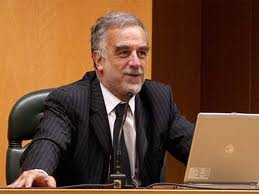
In a majority decision, the judges confirmed charges against Deputy Prime Minister Uhuru Kenyatta, Eldoret North MP William Ruto, Head of Civil Service Francis Muthaura and journalist Joshua arap Sang. Charges against Tinderet MP Henry Kosgey and former Police Commissioner Hussein Ali were not confirmed after the Judges found insufficient grounds for sustaining them.
Now we have understood that the first acts of violence were planned for months by an organization. That is important because it shows the violence was triggered.
I would like to recognize that the suspects’ attitude helped to have a positive debate.
President Kibaki’s commitment to resettle IDPs is very important because it shows concern to the victims.
The reason Mr Kosgey was left off was because there was only one witness. In the case of Mr Ali, we are still investigating Police activities in Kibera and Kisumu.
Some suspects have said they will appeal the ruling; we should respect that.
We respect the right of the suspects to appeal and the Judges shall decide. It’s still a long journey but yesterday was a milestone.
Kenya has a right to challenge (admissibility of cases in the ICC) and if they have a genuine case, it is okay.
We are managing the witnesses very well, nothing wrong has happened. As you know there is a unit for the witnesses.
In the Ruto case, we had a witness who said Mr Ruto was in the lead and Mr Sang was giving out the information. Another witness said Mr Kosgey was also in the lead. But it was only one witness, so the Judges said it was not enough.
The Police were providing free zones for the Mungiki that was why we thought Mr Ali was involved. That is why we are going back to check on Kibera and Kisumu.
The decision to release the two was based on factual analysis. What we need to do now is more research.
(Regarding Mr Ruto and Mr Kenyatta’s presidential candidature) Who runs in Kenya, how to do it is a Kenyan question. It is not up to me.
Pre-trial is not punishment. Punishment will come at the end.
Kenya will show the world how to manage a crisis. That to me is a new thing. This shows a different path in the 21st century in resolving conflict.
Having the suspects tried at the same time is one of the options we are looking at.
About the Author


They call the Third World the lazy man’s purview; the sluggishly slothful and languorous prefecture. In this realm the majority of the people are sleepy, dreamy, totally penniless, needy, destitute, poverty-stricken, disfavored, and impoverished. In this demesne, as they call it, there are hardly any discoveries, inventions, and innovations. Africa is the trailblazer. Some still call it “the dark continent” for the light that flickers under the tunnel is not that of hope, but an approaching train. And because countless keep waiting in the way of the train, millions die and many more remain decapitated by the day.
“It’s amazing how you all sit there and watch yourselves die,” the man next to me said. “Get up and do something about it”. I lifted my head to meet the eyes of the man who was going to occupy the seat next to me on the flight. Brawny, fully bald-headed, with intense, steely eyes, he was as cold as they come.
When I discovered I was going to spend eight hours on a non-stop American Airlines flight from Los Angeles to Boston seated next to him, I was angst-ridden. I associate marble-shaven Caucasians with skin-heads, most of who are racist.
“My name is Walter,” he extended his hand as soon as I settled in my seat.
I told him mine with a precautious smile.
“Where are you from?” he asked.
“Kenya”, I answered as I buckled the safety belt on.
“Kenya!” he exclaimed, “Kenyatta´s country.”
“Not any more,” I said, “Now it’s Mwai Kibaki’s and Raila Odinga’s. We have both a President and a Prime Minister, a real multi-party state just like the US or any European country”
“But of course,” he responded. “Agwambo was installed as your Prime Minister after the 2007 elections.”
My face registered the surprise at his mention of Raila’s nickname Agwambo. Walter smiled, and in those cold eyes I saw an amenable fellow, one of those American highbrows who shuttle between Africa and the U.S.
“I spent five years in Kenya in the 1980s,” he continued. “I wined and dined with many highly intelligent Kenyans.” He lowered his voice. “I was part of the IMF group that came to rip you guys off.” He smirked. “Your government put me in a million dollar mansion overlooking a shanty town called Mathare. From my balcony I saw it all, the rich and the poor, the ailing, the dead, and the healthy.”
“Are you still with the IMF?” I asked.
“I have since moved to yet another group with similar intentions. In the next few months my colleagues and I will be in Nairobi to hypnotize those two guys you call “principals”. I work for the broker that has acquired a chunk of your debt. Your government owes not the World Bank, but us millions of dollars. We’ll be in Nairobi to offer your government a couple of millions and fly back with a check twenty times greater.”
“No, you won’t,” I said. “Raila is incorruptible. He is …”
He was laughing. “Says who? Give me an African president, Prime Minister or politician. Just one that has not fallen for our carrot and stick routine.”
Quett Masire’s name popped up.
“Oh, him, well, we never got to him because he turned down the IMF and the World Bank. It was perhaps the smartest thing for him to do.”
At midnight we were airborne and the captain wished us a pleasant flight.
“Isn’t that beautiful,” Walter said looking down at the array of lights that lit up the city in the dark.
From my middle seat, I took a glance and nodded admirably.
“That’s white man’s country,” he said. “We came to America on Mayflower and turned Indian land into a paradise and now the most powerful nation on earth. We discovered the bulb, and built this aircraft to fly us to pleasure resorts like Lake Kenya.”
I grinned. “There is no Lake Kenya.”
He curled his lips into a smug smile. “That’s what we call your country. You guys are as stagnant as the water in a lake. We come in with our large boats and fish your minerals and your wildlife and leave morsels, crumbs. That’s your staple food, crumbs. That corn-meal you eat, what’s it called locally, agali?
“Ugali”, I corrected him quietly.
“That’s crumbs, the Tilapia fish you call Ngege is crumbs. We the Bwanas (whites) take the cat fish. I am the Bwana and you are the “Boyi”. I get what I want and you get what you deserve, crumbs. That’s what lazy people get, Kenyans, Africans, the entire Third World.”
The smile vanished from my face.
“I see you are getting pissed off,” Walter said and lowered his voice. “You are thinking this Bwana is a racist. That’s how most Kenyans respond when I tell them the truth. They go ballistic. Okay. Let’s for a moment put our skin pigmentations, this black and white crap, aside. Tell me, my friend, what is the difference between you and me?”
“There’s no difference”, I crooked out angrily.
“Absolutely none,” he exclaimed. “Scientists in the Human Genome Project have proved that. It took them thirteen years to determine the complete sequence of the three billion DNA subunits. After they were all done it was clear that 99.9% nucleotide bases were exactly the same in you and me. We are the same people. All white, Asian, Latino, and black people on this aircraft are the same.”
I nodded cautiously.
“And yet I feel superior,” he smiled fatalistically. “Every white person on this plane feels superior to a black person. The white guy who picks up garbage, the homeless white trash on drugs, feels superior to you no matter his status or education. I can pick up a nincompoop from the New York streets, clean him up, and take him to Nairobi and you all be crowding around him chanting muzungu, muzungu and yet he’s a riffraff. Tell me why my angry friend.”
For a moment I was speechless.
“Please don’t blame it on slavery like the African Americans do, or colonialism, or some psychological impact or some kind of stigmatization. And don’t give me the brainwash poppycock. Give me a better answer.”
I was thinking and furious.
He continued “Excuse what I am about to say. Please do not take offense.”
I felt blood rush to my head and prepared for the worst.
“You my friend flying with me and all your kind are lazy,” he said. “When you rest your head on the pillow you don’t dream big. You and other so-called African intellectuals are damn lazy, each one of you. It is you, and not those poor starving people, who is the reason Africa is in such a deplorable state.”
“That’s not a nice thing to say,” I spat out in protested.
He was implacable. “Oh yes it is and I will say it again, you are lazy. Poor and uneducated Africans are the most hardworking people on earth. I saw them in the Lusaka markets and on the street selling merchandise. I saw them in villages toiling away. I saw women in Nairobi’s Industrial Area crushing stones for sell and I wept. I said to myself where are the Kenyan intellectuals? Are the Kenyan engineers so imperceptive they cannot invent a simple stone crusher, or a simple water filter to purify well water for those poor villagers? Are you telling me that after forty plus years of independence your Nairobi university school of engineering has not produced a scientist or an engineer who can make simple small machines for mass use? What is the school there for then?”
I held my breath. My head began to pound….
“Do you know where I found your intellectuals? They were in bars drinking. They were at the Muthiaga Golf Club, Nairobi Sports Club, Wilson’s Flying Club and all over Westlands entertainment spots. I saw with my own eyes a bunch of alcoholic graduates. Kenyan intellectuals work from eight to five and spend the evening drinking. We don’t. We reserve the evening for brainstorming.”
He looked me in the eye.
“And you flying to Boston and all of you Kenyans in the Diaspora are just as lazy and apathetic to your country. You don’t care about your country and yet many of you live in slums like Mathare in squalor. Many have died or are dying of neglect by you. They are dying of AIDS because you cannot come up with your own cure. You are here calling yourselves graduates, researchers and scientists and are fast at articulating your credentials once asked, Oh! I have a PhD in this and that. PhD my foot!”
I was completely deflated.
“Wake up you all!” he exclaimed, attracting the attention of nearby passengers. “You should be busy lifting ideas, formulae, recipes, and diagrams from American manufacturing factories and sending them to your own factories. All those research findings and dissertation papers you compile should be your country’s treasure. Why do you think the Asians are a force to reckon with? They stole our ideas and turned them into their own. Look at Japan, China, India, just look at them.”
He paused. “The Bwana has spoken,” he said and grinned. “As long as you are dependent on my plane, I shall feel superior and you my friend shall remain inferior, how about that? The Chinese, Japanese, Indians, even Latinos are a notch better. You Africans are at the bottom of the totem pole.”
He lowered his voice. “Get over this white skin syndrome and inferiority complex. Begin to feel confident. Become innovative and make your own stuff for god’s sake.”
At 8 a.m. the plane touched down at Boston’s Logan International Airport. Walter reached for my hand.
“I know I was too strong, but I don’t give it a damn. I have been to Kenya and have seen too much poverty.” He pulled out a piece of paper and scribbled something. “Here, read this book. It was written by a friend.”
He had written only the title: “Lords of Poverty.”
Thunderstruck, I had a sinking feeling. I watched Walter walk through the airport doors to a waiting car. He had left a huge dust devil twirling in my mind, stirring up sad memories of home. I could see Kenya’s cognoscente, intelligentsia, academics, highbrows, and scholars in the places he had mentioned guzzling and talking irrelevancies. I remembered some who have since passed on, how they got the highest grades in mathematics and the sciences and attained the highest education on the planet. They had been to Harvard, Oxford, Yale, Massachusetts Institute of Technology (MIT), only to leave us with not a single invention or discovery. I knew some by name and drunk with them at the Nairobi Sports Club and Madhouse.
Walter is right. It is true that since independence we have failed to nurture creativity and collective orientations. We as a nation lack a workhorse mentality and behave like 37 million civil servants dependent on a government salary. We believe that development is generated 8-to-5 behind a desk wearing a tie with our degrees hanging on the wall. Such a working environment does not offer the opportunity for fellowship, the excitement of competition, and the spectacle of innovative rituals.
But the intelligentsia is not solely, or even mainly, to blame. The larger failure is due to political circumstances over which we have had little control. The past governments failed to create an environment of possibility that fosters camaraderie, rewards innovative ideas and encourages resilience. Kenyatta, Moi and Kibaki embraced orthodox ideas and therefore failed to offer many opportunities for thinking out of the box.
I believe the next President will have been cast in the same faculties as those of his predecessors. If today I told him that we can build our own car, he would throw me out.
“Unawazimu? Toka hapa!” (Are you mad? Get out of here)
Knowing well that this coming President will not embody innovation at Walter’s level let’s begin to look for a technologically active-positive leader who can succeed him after a term or two. That way we can make our own stone crushers, water filters, water pumps, razor blades, and harvesters. Let’s dream big and make tractors, cars, and planes, or, like Walter said, forever remain inferior.
A fundamental transformation of our country from what is essentially non-innovative to a strategic superior African country requires a bold risk-taking educated leader with a nationalistic outlook. Don’t be highly strung and feel insulted by Walter. Take a moment and think about our country. Our journey from 1963 has been marked by tears. It has been an emotionally overwhelming experience. Each one of us has lost a loved one to poverty, hunger, and disease. The number of graves is catching up with the population. It’s time to change our political culture. It’s time for Kenyan intellectuals to cultivate an active-positive progressive movement that will change our lives forever. Don’t be afraid or dispirited, rise to the challenge and salvage the remaining few of your beloved ones.
Wow what an artical Hatari…I seriously think we need to wake up my dear Kenyans,lets bring some real change to Kenya,that mzungu has really touched my feelings.