Weak shilling
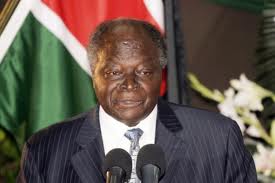
On October 25, 2011 the Nation newspaper’s financial analyst Jaindi Kisero, wrote that the Kenyan shilling crisis exposed the “dire state of the fundamentals in this economy.” He argued that during Kibaki’s presidency, the economy has been financed through government borrowing, financed by large budget deficits, at almost 8 per cent of the GDP. More money was poured into the development budget to build the infrastructure, especially buildings and roads. On the other hand, a lot of money was spent to import materials like steel, used in buildings. The cement used to construct Thika Road is also imported from Shanghai by the Chinese construction company. In the long run, the impressive economic figures were not sustainable because Kenya’s foundation for wealth generation is weak.
By 2010, Kenya’s exports could only pay for 55 per cent of its imports. Meanwhile, a culture of private consumption developed, and access to cheap personal bank loans doubled in the past five years to KSh206 billion. The middle class increased its consumption without optimizing production, thereby raising the level of inflation. By 2007, economists and investment analysts had raised concern about the appreciation of the shilling from KSh81 to 67 against the dollar. However, the Central Bank of Kenya ignored this, and foolishly kept the shilling strong. When Western economies suffered financially last year, Kenya paid more for imports and the weak shilling also opened up for capital flows by investors, to more steady markets elsewhere.
In 2011, the Central Bank Governor Professor Njuguna Ndung’u, was ranked the least effective policy maker in sub-Saharan Africa, for failing to act against rising commodity prices and the collapse of the Kenyan shilling. The shilling nose dived from KSh80 to the dollar in January 2011 to 107 in October, and he blamed speculators who had nothing to do with it. Two of the 10 analysts who ranked Ndung’u described him as “asleep at the wheels” and that he had “missed the plot entirely.”
Former Central bank boss Micah Cheserem also said that Ndung’u was to blame squarely for not intervening to save the shilling from depreciation. Cheserem dismissed Prof Ndung’u’s statement blaming the financial crisis in the West for the shilling’s woes saying “they (CBK) should explain the rapid fall [of the shilling” because it either failed to detect, or ignored signs of trouble, yet continued to borrow cheap funds from the money market. (In: Standard newspaper December 7, 2011). Cheserem also suggested that future CBK governors and their deputies should be appointed through competitive processes. Professor Ndung’u was appointed by Kibaki.
A ‘Kenyan spring’?
The 2011 Tunisian Revolution which paved the way for the Arab Spring, was ignited by continuous humiliation faced by the late 26-year old Mohammed Bouazizi, who was an unlicensed fruit and vegetable vendor. On the fateful morning of December 26, 2010, as he pushed his cart selling stuff, a female municipal official came by and confiscated his scale. It was worth $100 and he would have to pay a bribe to retrieve it. He had faced such a situation before, but this time he complained and the woman slapped him. He then went to the government office in the town centre to demand his scale back, but they did not allow him entry. He left, went to a petrol station, bought petrol and returned to the government building. He then poured petrol over himself and lit a match crying out: “How do you expect me to make a living?” He died of severe burn injuries a few days later. The social and political unrest experienced afterwards in Tunisia were as a result of accumulated frustrations among the citizens, due to high unemployment, food inflation, corruption, lack of freedom of speech and other political freedoms, and poor living conditions.
Many Kenyans undergo similar humiliation as Bouazizi did, and have to bribe government officials frequently to access various services that they have a right to, as taxpayers. Kenyans should to be smart enough not to vote back corrupt politicians during this year’s elections. They are the ones supporting a bandit economy which encourages illicit capital flows abroad to the tune of billions of shillings, and other illegal deals for personal gains. Meanwhile, the common Kenyans face serious poverty and live on less than a dollar a day. Therefore, they need to revolutionize their political thinking and protest against useless economic policies created by Kibaki’s presidency.
Video: Corruption in Kenya and high food rpices
Jared Odero
Related:
About the Author


Is she still in the office?who can trust such arrogant person like her.she should lead by example.Resign Nancy Barasa because u don’t deserve to be there,shame on you.
An activist given just a little madaraka and she is already despising wananchi. She’s just another activist gone horribly wrong.
Kenyans, watch out for activists in the 2012 elections. You will know them by their strange demands for helicopters, threats on helpless security guards, complaints about getting nusu kapeti and weird obsession with a personal portable toilet.
Vote wisely in 2012!
Nancy Baraza actions last Saturday need to be addressed in reference to what the constitution says:Article 168{e} says an officer of court can be removed from office for (e) gross misconduct or misbehavior.Article 75 says tells us how a State officer should conduct himself or herself.75. (1) A State officer shall behave, whether in public and official life, in private life, or in association with other persons, in a manner that avoids—(a) any conflict between personal interests and public or official duties;(b) compromising any public or official interest in favour of a personal interest; or(c) demeaning the office the officer holds.I must say the DCJ has truly demeaned the office she holds which is meant to uphold the law for each citizen small or big. By subjecting the lady guard Moraa to such frightening,humiliating and traumatizing experience she exhibited signs of a person drunk with power and therefore incapable of being rational and fair in her deliberations on the bench. To me this constitutes gross misconduct and it demeans the office that she holds.I am sorry to say she has embarrassed us women by showing a side of hers that tells us she was not ready for such a big responsible but yet honorable job. Leaders ought to practice HUMILITY defined as modesty, lacking pretense, not believing that you are superior to others.Humility is a quality of being courteously respectful of others. It is the opposite of aggressiveness, arrogance, boastfulness, and vanity. Rather than, “Me first,” humility allows us to say, “No, you first, my friend.” Humility is the quality that lets us go more than halfway to meet the needs and demands of others.Nancy and others in leadership ought to learn this and start practicing it as in the new dispensation Kenyans expect the best from them and will not take their arrogance lying down anymore!
Madam Baraza should resign if she has any scruples of self pride. I fully believe the security guard’s version since she doesnt know Baraz,a thus no motive to malign her. Like someone said earlier all them activists are the same, the political landscape is littered with Kiraitus, Kibwanas, Karuas, Mutungas, Githus and ofcourse Barazas. Just watch the haughtiness of AG Githu barely a year into his AGship. Baraza is just another wolf in sheepskin. The citizen’s trust in Mutunga’s and her appointment has been betrayed royally. Considering the high threshold that CJ and DCJ set for other Kenyans it is only reasonable that she quit. If Baraza treats a security guard at a public establishment with such disdain and physical harassment, who knows how she treats her official guards and domestc staff? Quit now Madam Baraza.
This is the highest degree of impunity done on kenyan soil by the expected respectable highest kenyan. Judges are expected to set precedents in their works; Baraza started long ago to set precedents e.g. her name starts with ‘ms’ despite being old enough to be called mrs., she fought for gays and lesbians rights, she threatens people with gus e.t.c. This gun should be taken immediately now that we remember that she fought for gay/lesbians rights. With the big salary she is earning, she may force people into doing other things using this gun. A gun is not a toy! This is the crop of people that we have allowed activists to bring into people service.
MS Barasa should be forced to pay that little poor woman guard who was humiliated (2million plus intrests is enough punishment so that Barasa the new CJ may feel and perhaps others with impunity may feel and wake-up- In capitalist countries like Kenya These impunity -lords my on ly realize their sins when their wealth (ill-gotten) is affected. Let MS Barasa pay that woman a (2million) with intrests and close the chapter.
This is Mwai Kibakis Kenya 99% of Kenyan womedn are Prostitutes that figure inclunding girls/married women all women in Kenya >Does anyone has a solution and what should be done inorder to alleviate this poverty that forces each and every Kenyan woman to sell their Pussies?
It is a grave disaster to see children born in Kenya are hiv/aids carriers.
Is Equity’s dominance sign of the future?
Published on 29/01/2012
By Dominic Odipo
When we last wrote a comparative piece in this column about Kenya’s largest bank groups, we noted that, surprisingly, on a much smaller asset base, the Equity Bank Group (EBG) had made a substantially higher before-tax profit than the Kenya Commercial Bank Group (KCB) over the first nine months of 2011.
Early signs
How, we asked, had Equity, a much smaller and newer banking house, beaten KCB in these profit sweepstakes?
Hardly a month later, Dr, James Mwangi, the chief executive officer of the Equity Bank Group, was nominated the African Banker of the Year by one of the continent’s most prestigious banking magazines.
Evidently, other African banking cognoscenti had noticed what was happening at Equity.
In that article, we also made more than fleeting reference to the EBG’s ‘’Wings to Fly’’ initiative through which the group, in partnership with the MasterCard Foundation, had launched a comprehensive scholarship program for young Kenyans from needy family backgrounds in all of the country’s 47 counties who scored at least 350 marks in the KCPE examinations.
Dr Mwangi said at the time that the scholarship and leadership development program would cover tuition, books, uniforms and pocket money for at least two students from each county who would otherwise not be able to proceed to secondary school.
According to reports carried in the local Press the other week, the Equity Group Foundation will continue this program this year ( alongside a similar initiative run by the KCB Group) under which more than 2000 needy students will be provided full secondary school scholarships.
But for those who closely follow the latest developments in the country’s banking sector, there was another report in the Press last week which could hardly have gone unnoticed.
The report said that about 960 inmates at the Naivasha Maximum Prison had just graduated after a 12-week financial literacy-training program organized by Equity Bank.
Breaking walls
It added that the Naivasha group was the second such class to graduate with a certification in financial literacy after a similar group of 300 inmates graduated last year from the Garissa Provincial G.K. Prison under the Financial Knowledge for Africa (FiKA) project.
What, in effect, was the central message of that report? That message was that the Equity Bank Group is equipping Kenya’s prison inmates with vital financial skills, which they can quickly put to optimum use once they complete their sentences.
The question which then immediately came to mind was this: If Equity Bank has already broken through Kenya’s prison walls, what other national institutions might it be targeting next?
The army, police service, the National Youth Service? Which one?
At the beginning of the 1970s, the International Telephone & Telegraph Company of America (ITT), under its indefatigable CEO Harold Geneen, was one of the biggest players on the American corporate scene.
Its interests straddled the American economy from hotels and insurance to car hire, cutlery and airlines.
An American could wake up in an ITT-financed house in Los Angeles, eat his ITT-produced breakfast cereals from ITT-made cutlery, take an ITT taxi to the airport, board a flight to New York on an ITT airliner, pick another ITT taxi from the airport to the Sheraton Manhattan-an ITT hotel- for the night while all along the trip he would have been covered by ITT insurance. ITT, under Geneen, had become the world’s most powerful conglomerate.
Sometimes, when one reads the latest reports about Equity Bank in the Press, one wonders whether ITT and Geneen often feature prominently at the back of Dr Mwangi’s mind.
If they do, then the other local and regional banks now competing directly with Equity Bank need to go back to the drawing board and re-write their core objectives and banking strategies very carefully.
If they don’t, they may soon discover that Equity Bank has already overtaken them in most of their core market segments.
Taking over
One of these days, a Kenyan could very well wake up in an Equity-financed house, eat his breakfast from Equity-financed furniture, drive to work in an Equity-financed car, spend the whole morning in an Equity-financed office building, break for lunch and walk into the nearest Equity Bank branch to replenish his pockets and then go back home the same way he came.
If he stumbles into a police case, he might have to deal with Equity-trained policemen who may then haul him before a former “Wings to Fly” student now sitting as the presiding judge who, in the worst scenario, may commit him to jail to join his fellow Equity-trained inmates.
If the other local banks do not wake up to the real strategic challenge now being epitomised by Equity Bank, it may soon be too late for them.
For there is no longer any doubt that Equity Bank is leading and the rest are following.
-The writer is a lecturer and consultant in Nairobi.
MPs, Equity Bank boss clash in shilling fall probe
By David Ochami
Equity Bank’s managing Director James Mwangi on Monday admitted that subsidiaries of the legendary bank in Kenya and abroad are either loss making or moribund and have had to be shut down.
He said this as he testified to parliament’s select
committee investigating the historic fall of the Kenyan shilling late last year when MPs accused him of receiving favours from the Kibaki regime, wielding huge influence on the Central Bank of Kenya and refusing to identify the actual triggers of the†depreciation.
Most MPs believe the depreciation was engineered for illegal gain and that Mwangi belongs to a group of “super three” bank CEOs that might know what really happened when the shilling went down.
MPs also claimed that Equity Bank which became a commercial bank in 2004 had staged miraculous advances and received state support including winning concessions to fund expansion at the Kenya Power and Lighting Company, Rift Valley Railways and emerging geothermal ventures.
Nominated MP Rachel Shebesh accused Mwangi of uttering unconvincing “economic mumbo jumbo” and minimising Equity Bank’s stake in foreign exchange trade and influence in the banking sector as he tried to explain what triggered the depreciation.
Shebesh said the bank had received huge deposits from the government including from the Economic Stimulus Package, youth and women funds
which Mwangi denied with the nominated MP concluding that the “difference between Equity Bank and state machinery is minimal.
The MD who is a former manager in the collapsed Trade Bank said last year his bank received Sh400 million deposits of which Sh100 million went to the youth fund and the remainder shared between it and two other banks for disbursement to the small and medium entreprises.
And he said his institution was receiving a lot of credit from international bank because it was highly rated by the International Finance Corporation and Financial Times as the 16th most stable and
sustainable bank in the world with a capital base of over Sh200 billion.
Because of this rating he said Equity can borrow huge sums from reputable financiers at low rates of between 2 to 3 per cent for lending in Kenya at between 5 and 7 per cent.
Mwangi claimed that his “indigenous” bank was a victim of “vicious and deliberate disinformation” by competitors and denied receiving preferential treatment by the government through concessionary access to credit but MPs led by Committee chairman Aden Keinan dismissed his reasoning over the short term triggers of the depreciation.
Keinan said: “I am sure you know one or two things about what happened [leading to the depreciation] but after talking here for over two hours you have
not told us. We know the influence of Dr Mwangi in government and his relationship with the CBK governor.”
According to the MD a steep rise in interest rates and offloading of shares by foreign investors on the Nairobi Securities Exchange were the immediate triggers of the depreciation and added that preceding
low interest rates spurred expanded borrowing by an emerging Kenyan middle class with a propensity to consume imported goods.
This and a series of other activities spurred a high demand of foreign currency and shortage of US dollars.
Mwangi alleged that 26 major global institutions and brands had relocated to Kenya from South Africa and other countries putting a strain on dollar demand.
He also argued that in recent years a construction boom had spurred foreign imports that required foreign currency at a time when the Kenyan government was spending 25 per cent of its earnings on fuel imports.
“Our total demand for [US] dollars went high by 16 per cent,” said the MD who† also chairs the Vision 2030 Board but Mps felt Mwangi who had said his bank traded only Sh 508 million in foreign currency at the time of the historic depreciation was engaging in seductive and misleading speeches.
Keinan said Mwangi’s arguments did not address what really happened when the shilling tumbled from Sh85 to Sh107 against the US dollar between October and November last year.
“Was that consumption pattern (of the middle class and the relocations) only peculiar to those two months,” asked Keinan who added that the global and local factors Mwangi was blaming for the
depreciation have not changed yet the shilling has recovered.
Mwangi counter argued that the triggers were set off by the fact that mid last year the economy was facing low tea and coffee exports and slump in tourism that reduced foreign currency circulation.
Committee member Chris Okemo said that despite excellent statements of profits Equity Bank and other commercial banks have not been able to justify their high lending rates and interest charged on deposits and the MD wavered as he tried to explain why his bank charges 25 per cent on lending rates while giving up to 32 per cent on deposits.
Okemo told him that the lack of explanation on this matter had forced MPs to support proposed amendments to the Banking Act through the
Finance Bill.
According to the MD Equity Investment Bank was closed two years ago after making a loss of Sh89 million while Equity Investment Services
which hosts the bank’s technology is inactive at the moment.
He also revealed that Equity Investment Group with interests in South Sudan, Tanzania, Rwanda and Uganda† made a Sh600 million loss in Uganda.
The Strange Story of James Mwangi & Alnoor Kassam
May 29, 2009
Over the last 5 years, Equity Bank’s rise has created a sleuth of cinderall stories for many development “experts” who had begun touting it as the super model of banking from many third world countries. The Cinderall stories however, often conveniently fail to mention the background of Equity Bank’s CEO James Mwangi and his former employer, Trade Bank, which was owned by a very colorful Kenyan Indian named Alnoor Kassam. An honest examination of their backgrounds would certainly put a dent into this cinderella story, which has made so many development experts feel good about themselves.
First, let’s look at the history of the founder of Trade bank. A bank, which collapsed in the 1980′s under dubious circumstances. The bank was accused of laundering money for politically connected individuals and when Kassam (foolishly) tried to collect a debt from one of those individuals, his life was threatened and he had to flee the country.
After fleeing Kenya, Kassam then winds up in Calgary, Canada where he had acquired permanent residency and decides to run for mayor because in his own words, he wants to bring about political accountability in Calagary in order to, “…. ensure the “highest ethical standards from civic politicians”. The entire article on his comedic run for mayor can be read here. It includes questions about where he got the $1 million dollars to fund his mayoral campaign (the accusation was that he got around $23 million dollars when trade bank collapsed and that’s what he was using in Canada).
Now, James Mwangi used to work for Trade bank and by extension, he also worked for Alnoor Kassam. He was a Senior Finance Manager at the bank and also left when it collapsed. Like Kassam, many have said that Mwangi left with a large chunk of money on his way out. The bank was also a conduit for the Goldenberg scam where billions of shillings were siphoned out of the country. The depositers at the bank have never recovered their money. I wonder if they are now Equity bank customers?
So, fast forward, 15 or so years later and Mwangi makes a reappearance, but this time as the CEO of a new bank called Equity. This time, the public relations logo for the banks existence is simply brilliant: They are going to give poor people a chance to put their money in the bank for free. Then, they are going to give these poor people loans and charge them a much lower interest rate (tears are falling from my eye’s already at such altruistic storylines). And because Kenya has many, many, poor people, the bank gets flooded with new customers and it’s “deposits” grow astronomically. This is where my questions about what this bank is doing begin to arise.
What is Equity bank doing with people’s deposits? When you deposit money in a bank, it doesn’t just sit somewhere in a vault. Your deposits are pooled together and the bank re-invests them around the world. However, most countries have rules that require banks to leave a certain amount of just-in-case money aside. i.e. just in case people start asking for their money back, the bank will be able to give it back to them.
•Does anyone know where their money in Equity bank is being moved to?
•Is Equity bank putting aside the required just-in-case money?
•Universities have been built (Pioneer International University); Rental apartments are being put up, whose money are they using and are they telling people whose names are on “these investments”?
•I understand Equity is giving out large loans to politically connected people & again, they must be using money from all their depositers, but what if these loans are not paid back?
•Money from the youth fund and the women’s fund (both government programs) is being funnelled into Equity. Why? are they running short of cash?
Questions, questions, questions and no answers. Nobody seems to know what these guys are really doing.
I’m honestly beginning to believe that Equity Bank may actually be a ponzi scheme and as long as Kibaki is in office, they’ll be able to keep the scheme going by getting the government to put it’s money in from all sorts of sources (youth fund, women’s fund, etc, etc) with them. However, I am beginning to think that if Kibaki goes in 2012, the tap will run dry and the scheme will come tumbling down, but Mwangi & Co., with their universities and other real estate investments, will be all set. It’s those poor depositers who’ll be left holding the bag again.
They’ve been questions about this bank’s dealing for about 2 years now, but those questions have been drowned out by those who don’t want to believe that their Cinderella story may turn out to be a nightmare.
Usually, if you want to find out information about a public company, you as a shareholder could sue them and then during the lawsuit, they’d be compelled to provide information about their company (under oath). If they lied under oath they could end up in jail and so many don’t lie (the consequences are too steep).
So, in Kenya where the courts are so corrupted and where the individuals at Equity are so politically connected, what options do you have to verify the information? I mean at some point, people are going to have to start asking questions beforehand because this is what happened with the stockbrokers that collapsed with people’s deposits. Everyone was caught up in the euphoria of making money that they forgot to take a step back and ask some serious questions about where their money was actually going.
I know this post will illicit angry responses, but we can’t have a culture where nothing is never questioned.
Youth Unemployment Crisis Continues, Millions of College Grads Flood Unemployment Lines
With more than 40 percent of the population unemployed in Kenya, it is the youth that seem to be the hardest hit. Millions of young people are unemployed and government efforts to boost job creation have remained minimal.
by Dorah Nesoba , Wednesday – October 13, 2010
NAIROBI, KENYA – “The most betrayed lot in this country are the youth,” says John Mutua, who is unemployed despite his two college degrees.
Mutua says Kenya is doomed because of its sky-high unemployment rate, currently more than 40 percent. Mutua says he wonders why the government is not coming up with new strategies and employment programs, especially for youth.
Herman Kamau, who owns a cybercafé and photocopying shop in Nairobi, says the problem of unemployment drove him to self-employment. “I saw no need to wait for employment after I completed my degree in Information Technology. Especially when I can invest in a business and earn a living from it,” he says.
Kamau says his search for a permanent job in the information technology sector resulted in a string of disappointments. “I was forced to accept short-term contracts in local and companies here in Nairobi, but I was receiving peanuts. I saved as much as I could and with a loan from my bank, I set up this business,” he says.
Pauline Achieng, a university student believes Kenya’s youth are a dynamic group, but because they are left with nothing to do, says they have become a drain on society. She says the impact of two-decades of increasing youth unemployment have been devastating for her peers.
“With labor market conditions continuing to worsen, long-term unemployment for youth is rising in all parts of Kenya,” says Achieng, who is about to complete her bachelor’s degree in art. “Young people who lack general education or work experience, are vulnerable to the crisis,” she says.
Statistics show that unemployment has been rising steadily in Kenya since 1963 when the country attained independence. Unemployment rates nearly tripled from 6.7 percent in 1978 to 19.9 in 2006. Today more than 40 percent of the country is unemployed.
But Kenya is not alone. Global youth unemployment has reached its highest level on record, and is expected to increase through the end of 2010, according to the International Labor Organization, ILO. The ILO released a grim report last month in conjunction with the United Nations International Youth Year.
The report, ILO Global Employment Trends for Youth 2010, revealed that of the world’s 620 million economically active youth, aged 15 to 24, nearly 81 million were unemployed at the end of 2009 — the highest number in history. The youth unemployment rate increased from 11.9 percent in 2007 before the global financial crisis and was now more than 13 percent at the end 2009, the most recent statistics available. In Kenya, more than 2 million young people are unemployed according to official statistics, but local economists say that number is likely much higher.
Youth in Kenya face serious challenges, including high rates of unemployment and underemployment. The overall unemployment rate for youth is double the adult average. Worldwide, youth unemployment is expected to increase to more than 16 million in the next two years, and to 24 million by 2017. As the outlook for young people searching for jobs in Kenya continues to worsen, many young people say they see little benefit in furthering their education or job training. The government has responded to the youth unemployment crisis by creating several new programs, including The Youth Enterprise Fund as a part of the economic stimulus package of 2009, but critics fault the program for being too focused on entrepreneurship and less on traditional job creation.
Increased Number of College Grads Flood the Labor Market
Unemployment in Kenya has continued to skyrocket since the early 1990s. Successive governments have struggled to bring to an end a crisis that has no reprieve on the horizon.
“You have a large number of people looking for secure jobs but cannot find them,” says Noah Chune, chief economist and director of research and education at the Central Organization of Trade Unions–Kenya, COTU-K. “The danger is that they will become fed-up and remove themselves from the labor market.”
Chune warns that many currently seeking jobs may lose their applicable job skills, like technology skills that fast become outdated, and their employment prospects will continue to worsen.
Such concerns are understandable in the wake of the new ILO report that cast a gloomy picture on youth unemployment. According to the Ministry of Youth and Sports, there are only 125,000 young people, 18-35 registered with formal employment nationwide, among Kenya’s population of nearly 39 million.
Kenya’s labor minister, John Munyes, puts the figure of unemployed youth at 1.9 million, with the majority of the unemployed between the ages of 15 and 24. Munyes conceded that the government has not been able to create enough job opportunities for millions of youth entering the job market annually. Munyes says the 750,000 students who graduate from educational institutions here each year will continue to flood the unemployment lines.
Chune says one reason new graduates struggle to find a job is because they still lack the necessary skills to compete in some markets. “Currently, the educational system produces graduates who lack the necessary skills to compete in the labor market,” Chune says. “[There is a] demand for new types of knowledge, skills, and expertise that are lacking in the existing labor force. Therefore, unemployment is not just a lack of jobs, but also lack of job skills due to inadequacy of training infrastructure. Many lack the means to acquire skills because of high levels of poverty.”
More than 60 percent of Kenyan youth live below the poverty line.
Government Action Plan Focuses on Entrepreneurship
Last month’s ILO report explains how unemployment, underemployment and discouragement can have a long-term negative impact on young people, compromising their future employment prospects. The study also highlights the cost of idleness among youth, saying, “societies lose their investment in education,” when new graduates cannot find employment. “Governments fail to receive contributions to social security systems and are forced to increase spending on remedial services,” the ILO report concluded.
In Kenya, government action to tame rising unemployment rates has been widely criticized. Over the course of the past year, new programs have been slow to emerge, but “noticeable,” Chune says.
The creation of the Ministry of Youth Affairs and Sports in 2005 was created in part to address youth idleness, training and employment options. In 2007, the Ministry debuted a Youth Employment Marshall Plan, which seeks to promote the successful transition of youth from school to work and, thereby, to contribute to economic development. The Plan aimed to create 500,000 new jobs by 2012, by expanding the number of technical training institutes and subsidizing students, supporting entrepreneurs in rural areas, initiating labor-intensive public works, developing the information and communication technology (ICT) sector. The plan also included a section on paying young people to plant trees, through a Trees for Jobs program, to help reverse the effects of deforestation. Last year, a total of 55,500 jobs were created up from 34,000 the previous year. The construction industry registered the highest number of new youth employees, especially in the private sector.
Another new program, The Youth Enterprise Fund, is a revolving loan facility that has so far distributed 1.6 billion shillings, $207,000 USD, to more than 55,000 youth enterprises across the country this year. And in May, the World Bank approved $60 million USD for Kenya to support unemployed youth in the country via The Kenya Youth Empowerment Project, KYEP, which will support Kenya’s efforts to increase access to youth-targeted temporary employment programs and to improve youth employability. Statistics on the success rates of those programs are not yet available.
“Skills training and gainful employment is not only crucial for the nation’s economic development, prosperity and social stability but also is vital for enabling each individual to develop their full potential and to live in dignity,” Chune says with a sigh.
http://www.globalpressinstitute.org/global-news/africa/kenya/youth-unemployment-crisis-continues-millions-college-grads-flood-unemployme
Posted Tuesday, February 14 2012 at 15:57
Parliamentary Committee calls for resignation of CBK Governor Njuguna Ndungu over decline of shilling. Urges Kibaki to form tribunal to probe his conduct.