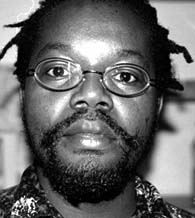
As the Kenyan government grapples with the crisis created by the Doctor’s strike, the Central Organization of Trade Unions (COTU) has issued a notice that it will call for a 10 day national strike by workers if the government does not reduce fuel prices. According to Francis Atwoli, the Secretary General of COTU, a reduction of fuel prices will press down prices of consumer commodities thereby making life affordable to poor workers who have been forced into a hand to mouth existence. Despite its current radical posture, COTU has been unable to intervene in numerous workers’ struggles while the Union’s leadership has also been detached from the workers it represents because of the leadership’s connection to the thieving ruling class.
When the University Academic Staff Union (UASU) mobilized lecturers into a strike in September to demand for higher wages, COTU was nowhere to be seen. Likewise, when Teachers downed their tools to demand for employment of more teachers, COTU’s leadership went on holiday. Despite the ongoing Doctor’s strike, there has been no word from COTU about the strike action. If COTU was seriously concerned with the plight of workers in Kenya, the Union could have shown solidarity with striking Teachers, Lecturers and now Doctors by sending solidarity messages and using its authority to put pressure on the government to address the workers’ grievances. At best, the Union could have called for “sympathy strikes” by its members in solidarity with workers who had entered into struggle to address common interests. Predictably, the Union went into hibernation only to emerge now with a notice about a ten day strike. It is against this background that the intentions of COTU needs to be examined.
With its current lethargic leadership paid lavishly by workers in Kenya, COTU’s role within the working class movement is that of a buffer between the corrupt ruling class and the struggling workers. A leader of poor workers cannot be driving a Benz car worth 33 million Kenyan shillings at workers’ expense. From an economic perspective, Atwoli is wealthier than many members of the Kenyan ruling class and to put it mildly, he belongs to the league of millionaires in Kenya with the difference being that his wealth originates from workers’ pockets. Under the circumstances he is unlikely to create a long-term crisis by calling for an indefinite strike because as a wealthy property owner, his business interests will also be hurt by any long-term worker’s strike. It is for this reason that Atwoli’s call for a 10 day “countrywide strike” draws curiosity.
Hijacking the weapon of strike in the interest of the corrupt ruling class
It is incredible that in calling for the 10 day strike, Atwoli is at the same time calling for the “reduction of fuel prices” instead of calling for a pay hike for the millions of poor workers in Kenya. This is because any calls for a reduction of fuel prices is directed towards the oil cartels whose thirst for profits dictates that they can never reduce oil prices. Since independence, there is no single day when oil cartels have reduced oil prices in Kenya because of demands, either from the government or Trade Unions. The only way to a radical reduction of oil prices is for the government to take control of the oil industry through nationalization, a measure that is impossible under Kenya’s current system of capitalism. Atwoli’s call for a reduction of oil prices is therefore hollow, propagandistic and designed to make COTU relevant in the face of persistent worker’s struggles in which COTU has been missing.
Another perplexing reality is that Atwoli is calling for a ten day strike when, from an analytical point of view, there is nothing such a strike action will achieve because it will neither hurt the government nor the oil cartels. In fact, the main victims of such a strike will be the workers themselves who will be unable to make traditional trips back to their rural homes to celebrate Christmas. The government will not be affected because ten days is very short and what the government will do is that it will either wait for days to elapse before business resumes or play “negotiation games” with COTU to pass time as it awaits for workers to return to work. For the oil cartels, it will be better for them to wait for ten days before resuming business instead of cutting prices and losing revenue over an indefinite period of time. Atwoli’s strike call has therefore suffered a defeat before the strike even begins.
Theoretically, Atwoli is seeking to hurt the government by calling for a countrywide strike. In reality, the government has no control over oil prices otherwise it could have reduced it long time ago. In any case, some members of the ruling class are also members of the oil cartels and by trying to hurt the government through an appeal to the oil cartels, Atwoli is playing a “merry-go -round” game. The only logical reason why Atwoli has suddenly awoken from his sleep to call for a strike is because there has been a series of strikes and COTU has been conspicuously absent so it is time to announce to Kenyans that COTU is still alive. This is unfortunate because the strategy is designed to fool gullible workers that COTU is fighting for their interests while in reality, the Union’s leadership is simply seeking to justify its huge salaries.
Strike actions remain the only weapon on the hands of workers. However, if workers remain unorganized politically under a Party that can represent their interests, the weapon of strike will continue to be hijacked by self-seekers and collaborators whose agenda is not to change the poor conditions of workers but to protect vested political, economic and strategic interests.
It is for this reason that workers in Kenya need their own Party to put the thieving politicians and conspiratorial Union leaders out of business. In the meantime, workers will continue to be pawns in a complicated power game that benefits the rich and dampens the struggles of the working people in Kenya.
Okoth Osewe
Secretary, Kenya Red Alliance (KRA)
About the Author


Kenya: Labour movement sinks to an abyss
By Fred Oluoch, May 2004
The Kenya African National Union (KANU) that has for years been accused of stifling the labour movement in the country is gone. But there is no indication that things have changed for the better, even with a new government in power.
That the labour movement in Kenya in its current form has lost its previous sparkle is not in doubt, the question is who or what is responsible. Opinions vary from the triumph of the market-driven capitalism over communism to sustained economic downturn, technological advancement leading to the decline in the labour-intensive methods of production, increased political interference and the government’s indifference to labour issues, to the evident lethargic leadership within the labour movement itself.
The beleaguered labour movement, union umbrella body, the Central Organisation of Trade Unions (COTU) held its elections in September 2000, in a move observers thought could inject more life into the lackluster trade union movement. But the event, that used to command considerable attention from the entire business community, the government and politicians, will this time be held against the background of a marked indifference from virtually every sector.
Francis Atwoli, who took over the leadership from the long-serving Joseph Mugalla, insists that “COTU is back on its feet after being run-down for years”. Many observers are however not convinced that the labour movement has come out of the rut, rather it is getting more toothless. Of great concern, is that Kenyan labour laws are archaic, and unless they are changed to blend with the new order in global labour movement, the Kenyan labour movement can only continue to experience a downward trend.
As it is, the current labour laws still smack of the colonial days. Workers put in long hours, with little pay and a very complicated mechanism of seeking compensation for work-related injuries or wrongful dismissal, mostly for belonging to the union. Then there are greedy union leaders who are easily compromised by unscrupulous employers.
Hopes that NARC was going to create a conducive environment for the resuscitation of the labour movement, seem to have been abandoned, with the government still condoning those employers who prevent their workers from joining trade unions .This happens despite Kenya being a signatory to various international treaties and conventions, which bind it to promoting the rights of workers.
The lacklustre performance of unions has given room for the civil society to engage in labour issues as part of their duty as human rights watchdog. While unions are warning non governmental organisations to keep off, the NGOs insist that workers’ right is their responsibility. They feel they cannot just sit back and watch as workers are subjected to dehumanising and exploitative conditions.
As a result, US$11924,000 million was lost due to a series of strike in early 2003 at the Export Processing Zones (EPZs), an event that was blamed on incitement by the NGOs. Most factory workers are underpaid, work for long hours under unhygienic conditions, and yet the labour movement feel threatened that the civil society could be encroaching on their turf.
Labour minister Ali Makwere, is on record conceding that “workers will continue to be exploited as long as archaic labour laws remain in place”, an admission that COTU has failed to push for the reform of archaic and repressive laws.
Even the proposed new lawsa result a task force appointed in 2001 are seen to be pro-employers contrary to the worker-friendly legislation. Industry observers attribute it to the successive decline of the labour movement in the last decade owing to the obsession by the labour leadership to value political patronage from the then governing party KANU at the expense of workers. This is a major departure given that the labour movement in Kenya is historically associated with the freedom struggle and an important component of African nationalism.
Notably, Kenya’s independence struggle owes a lot to the labour movement for having produced some astute agitators and negotiators such as the late Tom Mboya. It was a vehicle through which indigenous Kenyans articulated their burning aspiration for self-determination and independence.
But the movement has never known peace after independence in 1963 as successive governments were eager to meddle in labour affairs with the ultimate aim of control, given hat some of those who had taken over the reigns of power were clearly aware of the potency of a vibrant and independent labour movement.
With the labour movement having held its second elections since the introduction of political pluralism in the early 1990s, economists argue that the 40-year old Kenya is currently in its worst employment crisis since its independence from the British in 1963. Thousands of workers are being retrenched or arbitrarily sacked in both the public and private sector, as trade unions that have evidently lost their influence, resort to occasional feeble noises regarding the plight of Kenyan workers.
Since July 2000, the Kenya government, amidst stiff opposition from trade unions, has been implementing the four-phase retrenchment programme to shed off 30 per cent of its bloated workforce as prescribed by the International Monetary Fund (IMF) and the World Bank to the chagrin of the labour movement who are otherwise in no position to intervene.
The government, through the donor-backed Public Sector Reform Programme, was supposed to retrench 25,000 civil servants and shall have laid off a total of 42,000 by the beginning fn next year. The programme will cost US$99 million and is expected to save the government US$38 million annually.
Likewise, the hard-hit private sector owing to difficult business environment has followed suit where thousands of workers are being retrenched or laid off arbitrarily. A total of 120 firms in the private sector have folded in the last few years citing high taxation, poor infrastructure and insecurity, while close to 100 have been placed under receivership.
The latest phenomenon is that a good number of multinationals have decided to move their manufacturing units to other countries of the Common Market for Eastern and Southern Africa (COMESA) trade bloc leaving hundreds jobless. This has been occasioned by Free Trade Area (FTA) that enables multinationals to manufacture anywhere within the COMESA countries and export to Kenya taking advantage of the zero tariff. It is estimated that 20,000 Kenyans lose their jobs annually.
Thus, COTU is currently reeling under the effect of reduced membership and equally diminished credibility to speak on behalf of workers. COTU, which has 29 affiliated member unions, recently conceded that its operations have been severely curtailed due to cash flow problems.
The organization currently receives only US$13,000 in monthly remittance, down from US$57,000 netted the previous years. Worse for COTU, the giant 260,000-member Kenya National Union of Teachers (KNUT), is not an affiliate of the umbrella body, an event critics see as the reason why KNUT remains the most effective trade union in Kenya.
Yet, beside the economic slump, COTU officials trace their woes to the Kanu government that they accused of not only being averse to union activities, but has the knack of bowing to IMF and World Bank conditionalities without caring for the spiralling effect on the labour force, plus failing to incorporate the labour movement in key economic decisions by virtue of being a partner in economic development.
Though the Trade Disputes Act still requires employers to hold discussions with respective trade unions and labour officers on the terms of redundancy, this hardly happens as employers decide the nature and the size of their workforce at will, hence the frequent layoffs and the influx of unskilled foreign labour mainly from the Indian sub-continent.
As it is, the “rescue” of the labour movement could most likely come from outside rather than a deliberate effort by the unionists themselves to make a difference. In 2000, the US government made it plain to the Kenyan government that it must de-link itself from COTU if Kenya were to benefit from the African Growth and Opportunities Act (AGOA) that enables exports from Kenya and other African countries to penetrate the competitive US market.
Then in June the same year, the International Labour Organisation (ILO), threatened to blacklist Kenya if the government is not ready to allow the labour movement to operate freely and independently. It also demanded the revival of the proscribed Civil Servants’ Union (that has since been revived). The organization was banned in 1980 during the single party era, when the government sought to muzzle all organizations that exhibited the potential of promoting disaffection against the government.
Then there is the ongoing tussle between COTU and the Federation of Kenya Employers (FKE), over the proposed Industrial Court of Appeal (ICA). FKE supports the establishment of ICA on grounds that the poor state of the economy cannot sustain some of the awards handed out by the Industrial Court, and that some of the awards may force some employers to close shop, resulting in further unemployment.
FKE also argue that the spirit of negotiation is increasingly being eroded as workers and their representatives rush to court before exhausting other avenues with the belief that they will get a better deal.
The labour movement on the other hand is opposed to the move that it would further bog down the already cumbersome collective bargaining agreement (CBA), and that labour disputes will be allowed to drag on for years as employers seek to have the awards overruled or reduced. The idea of the Industrial Court of Appeal has been forwarded to the government through the ministry of labour seeking to amend the Trade Disputes Act.
Yet, both parties concur that delays in settlement of trade disputes do not augur well for industrial harmony. With only two presiding judges, the Industrial Court that was established in 1965, two years after Kenya’s independence, normally has a backlog of cases since a single suit can drag on for months or even years, while some workers are likely to be retrenched or die before the settlement.
Capitalism a very brutal economic system – Cedric Gina
Cedric Gina
04 December 2011
NUMSA president says Europe being subjected to same SAPs once inflicted on Africa
OPENING ADDRESS BY NUMSA PRESIDENT CEDRIC GINA TO NUMSA INTERNATIONAL SEMINAR ON CLIMATE CHANGE AND CLASS STRUGGLE, December 4 2011
Numsa National Office Bearers present here,
Cde George Mavrikos, General Secretary of WFTU,
International invitees,
Numsa leaders and officials,
ANC Study Group on Energy,
Cosatu Leadership present here,
Civil Society Representatives,
Comrades and friends,
Dear comrades,
Allow me to convey the revolutionary message from the National Office Bearers and the membership at large for your attendance in this important international climate change seminar that we are hosting, not just for our union but for the working class at large. This seminar is taking place when the crisis of global capitalism is worsening the conditions of the working class all over the world, including in the so called successful capitalist economies.
I will come back to this point later today.
I want to thank and welcome in particular, Cde George Mavrikos, our World Federation of Trade Unions General Secretary. Comrade Mavrikos commitment to African affiliates of the WFTU made him to shift other important engagements that he had, including the current struggles in Greece against the imposition of a right wing elected government by the European capitalist bosses who want to do the impossible, “to save capitalism”.
Capitalism is a very brutal economic system. It has recently allowed the downfall of capitalist leaders in Greece, Italy, and Egypt for the sake of saving its face. There is a new wave of structural adjustment programs imposed within the European Union. The structural adjustment programs were used to stifle the sovereignty of many African economies after independence. A message to Cde Mavrikos and our allies from Europe is that the so called austerity measures that are imposed in their countries are not different from the structural adjustment programs that have failed the African economies since independence.
We were indeed encouraged to witness the powerful protests by thousands of workers in Greece led by PALME in the recent past. The setback was that a right wing Prime Minister was replaced by another right wing politician chosen by the European leaders who want to save capitalism.
The current strike in the United Kingdom is another action by workers that bring some hope to us. When capitalism attacks the working class, it does so in a global scale and yet when we respond to this attack, it is through uncoordinated country by country action. The Occupy Wall Street movement is a movement that has started in the belly of capitalism. What do we think of it?
Cde Mavrikos, the Communist Party of Greece is hosting the international meeting of all Communists Parties in the world in few days time. Can we look forward to that historic meeting to give us a Third Communist International? Is the time not ripe for globalised action against capitalism? Is it not about time that communists revive the permanent international networks with a view to prepare for an opportune moment to overthrow capitalism when it is at its weakest like now?
Dear comrades, these questions can only be answered when we achieve the unity for the working class. The achievement of unity of ICFTU and WCL is not complete when WFTU is still not part of that unity. True to the call by Karl Marx, we say workers of the world must unite, and they have nothing to lose but your chains.
The minority in civil society formations that continues to look at workers with suspicion must be ashamed of themselves. The response to the crisis of capitalism will require maximum unity, not for the trade unions only, but for all sections of the working class.
This unity must be coupled with an ideological clarity that will strengthen the class character of the struggles between owners of production and the class that we belong to, the working class. All workers must know that we have nothing in common with the capitalist class.
World Federation of Trade Unions and NUMSA
The WFTU has a long history with South Africa’s own liberation movement. When SACTU, the forerunner of COSATU was banned with all people’s organisations in 1960, the WFTU became a home away from home for the leadership of SACTU.
Two years ago, NUMSA took a conscious decision to affiliate to WFTU. Our decision was questioned by many organisations, at home and in foreign lands. Our explanation which has not changed, is that we believe that the call for workers of the world to unite is a progressive call. We said that if our affiliation to WFTU will start a process of the total unity of all workers, we would have contributed in something very important for the working class as NUMSA.
We want to invite more affiliates of COSATU to join us in the WFTU family. We currently have NEHAWU and NUMSA. CEPPAWU’s discussion on affiliation is an advanced stage, but we are already with them in all our campaigns. Please allow me to give a special welcome to these affiliates of our federation. Many comrades have attended the other events organised by our other comrades from our other global federations, I invite all comrades to listen carefully to the input by our General Secretary, Cde Mavrikos and make up their minds!
I wish to thank the leadership of WFTU for deciding to bring the next Presidential Council to our country in February next year. We are looking forward to a successful meeting. The Africa office of WFTU, led by Cde Lulamile Sotaka and Cde Vuyo Bikistha will work very hard to ensure a smoothly coordinated meeting.
NUMSA AND CLIMATE CHANGE
This seminar is a culmination of the NUMSA Central Committee resolution that we took in August 2011. This is what we resolved:
The Central Committee endorsed a call for a socially owned renewable energy sector.
The Central Committee resolved to introduce a need for a socially owned renewable energy sector in the current nationalisation debate.
The CC resolved to convene a workshop on renewable energy in February 2012.
The CC resolved to set up a worker controlled Research and Development Group on climate change.
Preceding the above resolution was an in-depth discussion on the dangers facing the working class on climate change. The two extremes were identified, the maximalist ( close the smelters) and the green capitalism project informed by negotiated(win/win) transition to renewable energy. It is an undisputed fact that there can never be a win/win outcome in a class struggle.
Our view is that the language of ‘just transition’ needs a class analysis. We believe that a ‘just transition’ can become a disarming term for the working class if we are not careful. It must always be able clear that capitalism has caused the crisis of climate change that we see today.
The solutions to the crisis of capitalism do not lie in finding the appropriate regulation, but in the extent to which movements are able to wage a worldwide process of class struggle from below, that seeks profound changes in worldwide relations of production and the reproduction of human life.
NUMSA believes that the new envisaged renewable energy sector must be in the hands of the state. We see an opportunity for our government and the developing countries to opt out of reliance on the foreign owned technologies in developing a path towards a renewable energy future.
There is an urgent need to situate the question of climate change in a class struggle perspective. This is necessary in order to collectively become strong enough to face the period ahead as the worldwide climate crisis and crisis of capitalism intensify. This is a long- term process. It will not be solved in a 1-day seminar. The NUMSA seminar merely seeks to contribute to such a discussion.
We hope that this historic seminar will allow us to explore the resolutions of NUMSA Central Committee even further, informing the content of the February 2012 conference on socially owned renewable energy sector. This seminar and the conference must ultimately feed into the 9th national congress agenda for climate change.
I invite all participants to freely participate in the discussions today. NUMSA is what it is today because it allows debate to take place.
Asikhulume!
Thank you
Durban.
Issued by NUMSA, December 4 2011
KENYA: Dead Bodies and Agonized Families Paint Public Hospitals as Doctors’ Strike Enters Day 4
Professional Journalist: IQ4News Thursday, 8 December, 2011 – 08:42
Doctors in Kenya are demanding a pay rise and improved working conditions.
By Joab Apollo
‘’My God please help me. My son is going to die. God help my son”. Those are the words of a middle aged mother at Moi Teaching and Referral Hospital whose son is fighting for his life after he collapsed at home.
The ailment is unknown to the family; the effect of industrial boycott by doctors in all the public hospitals in Kenya. The medical practitioners continue to demonstrate in the streets of Nairobi with a slogan “Solidarity forever and the doctors must be paid!”
What began as a mere threat has now turned into a full-blown tornado with patients, most in preventable conditions, bearing the brunt. Pictures of dead bodies in wards and agonized family members of the sick paint public hospitals in Kenya as the boycott enters its fourth day.
The work is overwhelming for medical students who have come in handy as the government retreats to damage control tactics.
Return-to-work formula
The doctors are demanding a 300 percent pay rise, better working conditions and improved facilities in hospitals.
The Kenya Medical Practitioners, Pharmacists and Dentists Union (KMPDU) has maintained that its members will not return to work unless the government tables an agreeable return-to-work formula that will see them being paid in tandem with their workload and academic qualifications.
They called upon the public to take the sick to private hospitals for medical services.
KMPDU chairman, Dr. Victor Ngani said that the government has a hands off attitude towards the health sector that has seen many professionals in the field of medicine seek greener pastures in other countries.
“Six months ago, we were 2,900 doctors in the country. Now just six months later, we are 2,334 and this is acceptable” Ngani, said during a press briefing.
The union believes that even if the doctors were to be paid all their dues, a lot still needs to be tackled in public hospitals.
The doctors say that they are overworked and underpaid, a fact that has forced them to take to the streets despite deep empathy for the patients.
5000 Doctors
Kenya has about 5000 doctors in both public and private hospitals and the facilities are wanting.
In most health facilities in the country, patients lie on the floor due to the overwhelming number. On Tuesday, the Doctors Union rejected a government offer of up to Ksh. 50,000 monthly allowances saying they were not consulted in the announcement made by Assistant Minister for Medical Services Kambi Kazungu.
On Wednesday, the government announced it had increased the amount allocated to doctors’ allowances from Sh1.35 billion to Sh1.9 billion for the first phase and Sh5.2 billion for the second one.
Strongs of Industrial boycott
The first phase begins on December 1 and the second one will be implemented in July. However, the doctors refused to accept the offer with some threatening to resign next week.
Kazungu called on the doctors to understand the effect of their boycott to hospitals. He urged them to work for negotiations to continue.
“I call upon the Doctors to understand the situation. I have been calling the minister for finance every moment with out rest to look into how we can avert the crisis,” he said.
The strike comes against the backdrop of a string of industrial actions that now appears to be a norm in Kenya as inflation pushes many to the wall.
In August, teachers downed their tools while last month, lecturers in all the public universities snubbed work. The teachers were paid their dues while talks are under way to honour the demands by the dons. Now, the Central organization of trade Unions in Kenya (COTU) has given the government a one week ultimatum to increase the civil servants pay, failure to which they will take to the streets.
Atwoli thinks too much of himself, and imagines his staying as the KOTU Secretary General is crucial to the workers’ welfare. He draws one of the highest 10 salaries/+allowances in Kenya not commensurate with the work he is doing. You may call him a discrete establishment apologist in a worker’s garb.
May be he inspired Shakespeare to write the lines: ….sound and fury signifying nothing..!
COTU has never represented matatu drivers and conductors.In fact a group of matatu drivers and conductors are in the industrial court (cause 1676) fighting for the registration of their trade union which has been opposed by among others COTU. which sits and comprises of the labour board of Kenya.The matatu strike called by Matatu Welfare Association is illegal since it has no mandate to call for a strike and its leaders should be questioned by the C.I.D. for calling of numerous strikes hence paralyzing the economy.COTU should stop pegging itself with associations and welfare groups purporting to represent workers in the PSV so as to legitimize illegal strikes.