On the 13th of May, 2011, the Judicial Service Commission announced their choice for nominees to the positions of Chief Justice and Deputy Chief Justice of Kenya. Dr. Willy Mutunga was chosen for post of Chief Justice and Nancy Baraza for Deputy.
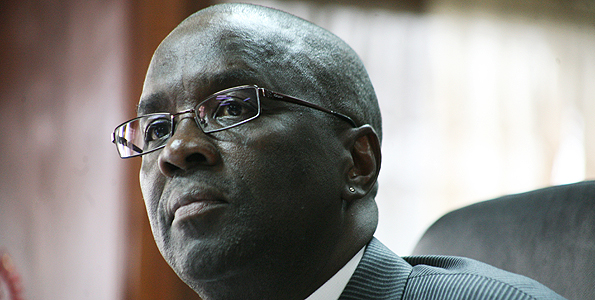
The Centre for Rights Education and Awareness (CREAW) wishes to heartily applaud the Judicial Service Commission for a job well done. The Commission set out in March 2011 to advertise, short-list, interview and scrutinise potential appointees to the post of Chief Justice of the Republic of Kenya. They shortlisted 10 applicants for the post of Chief Justice and 8 for the post of Deputy Chief Justice. We are delighted to learn that Dr. Willy Mutunga and Nancy Baraza are the lawyers who made the final list of nominees.
The JSC entered uncharted territory with this process. It was to be the first openly competitive recruitment of such high ranking judicial officers. They had little precedent on which to fall back upon. It is thus all the more impressive that the process has largely been fair, expeditious and open. The invitation of members of the public and the media to public interviews of the candidates raised the bar in inclusiveness and public participation as many witnessed the interviews live across the country.
We note that the JSC responded with alacrity to the criticism of the first attempt to nominate the Chief Justice of Kenya. This misguided effort by the president to defy the constitution led to the Centre for Rights Education and Awareness and its Civil Society partners filing suit in the High Court. We successfully challenged the flawed nomination process which was halted by the court. The Speaker of the National Assembly also gave a thoughtful ruling criticising the President’s decision.
The JSC quickly staked itself a place as an independent commission by coming out strongly to demand that it be included in the process of choosing the nation’s next top judge. This demand was met. The JSC did not disappoint. Where the executive had been inequitable, the JSC sought out the candidature of all Kenyans, regardless of race, gender, ethnicity or disability. Where the executive had been opaque and secretive, the JSC bent over backwards to afford ordinary Kenyans to opportunity to follow the process and witness the candidate interviews. Finally, while the executive had been ponderous in its deliberation, the JSC were a model of expeditious procedure and sound debate.
Their choice of candidates displays the independence, rigour and courage that the JSC embodies in its membership. Dr. Willy Mutunga, in particular, is a sterling choice. He has a lifelong commitment to reforming the broken governance system of the nation. He has been active in the reform movement since the 1970s. Dr. Mutunga was at the fore-front of the second liberation that ended the single-party tyranny of the Moi regime. For his forthright views he was detained in the 1980s. But prison failed to cow him and upon release he rejoined the battle with renewed gusto.
He holds an impeccable record of service as a lawyer spanning several decades- including as chair of the Law Society of Kenya between 1992-1993- and has distinguished himself as a public thinker of great intellect. Dr. Mutunga is among those who worked tirelessly to ensure the nation wrote and promulgated a new constitution. He taught countless young lawyers at law school and his door has always been open to Kenyans from all walks of life who approach him for advice, assistance or support. His commitment to access to justice for all is unquestioned and he will be a breath of fresh air to the judiciary’s quest to implement much-needed reforms.
The JSC deserves further praise for not merely paying lip service to the principle of gender equity, but nominating a highly experienced advocate, Nancy Baraza, a former FIDA chairperson and current vice-chairperson of the Kenya Law Reform Commission to deputise the Chief Justice.
What next for the nominees? The constitution stipulates that the President and the Prime Minister must consult on the names put forward. Subsequently, the names will be forwarded to the National Assembly. Should parliament approve, the President shall appoint the Chief Justice and the Deputy Chief Justice.
We expect that the process, after being given a tremendous lift by the quality of the JSC deliberations, does not sink yet again into the mud and mirk of political horse-trading and partisanship. We expect that the decisions made by the principals and the National Assembly will make Kenyans proud of their political class.
You, the politicians, must be sensitive to the fact that the next Chief Justice must have the confidence not just of the judiciary; not just of the legal community; but of the ordinary Kenyan as well. Over to you ladies and gentlemen.
For Kenya will never be the same again!
Ann Njogu,
Chairperson,
Centre for Rights Education and Awareness (CREAW),
Convent Drive , Lavington, Off Isaac Gathanju Rd, Lavington Green,
P.O. Box 11964, 00100,
Nairobi, Kenya.
Tel. 254 020 3860640; 254 020 2378271
ann.njogu@creaw.org
http://www.creawkenya.org
About the Author


I thank the JSC for their wise selection of the Chief Justice and his deputy, Willy Mutunga and Nancy Barasa respectively. That is what Kenyans want regardless of tribalism. If Kenyans can follow that transparency in the remaining Commissions for the new constitution implementation then who else can dispute that? Kenyans should not listen to the Politician who are going to be thrown out in the next election of 2012.
Congratulations! But why does Willy Mutunga wear an ear stud? Not a good image for a Kenyan CJ. Please toa hiyo kipuli sikioni.
This trend should continue & encouranged among all police men &military hence it will tame rogue commanders>HomeNews News
Work and family stress ‘drove officer to kill’
Share Bookmark Print Email
Email this article to a friend
Friend’s Email Address
Your Email
Message
Submit Cancel
Rating
The scene at Parklands Police Station where a police officer killed his boss before turning the gun on himself May 14,2011. Photo/WIILIAM OERI
By ZADDOCK ANGIRA zangira@ke.nationmedia.com
Posted Sunday, May 15 2011 at 21:42
Frustrations at work and at home could have caused a police constable to kill his colleague before committing suicide on Saturday.
Related Stories
Policeman kills boss, commits suicide
Constable Jacob Kipserem Rop was returning his G3 rifle to the armoury after night duties when he quarrelled with his boss, senior sergeant Hassan Yusuf, before shooting him dead.
He then shot and injured his colleague before turning the gun on himself. (READ: Policeman kills boss, commits suicide)
According to fellow officers, Mr Rop also had marital problems that prompted a family meeting to be called to resolve the matter.
The meeting was scheduled for Saturday at around 4pm, but he died a few hours before.
Some of his colleagues at Parklands and Gigiri police stations said the constable had disagreed with his boss over allocation of duties for the week.
He was said to have been enraged by the way the duty roster was done.
An officer, who sought anonymity, said their seniors used certain provisions in the Force Standing Orders to frustrate them.
The officer said the same sections were in the National Police Service Bill, 2010, and he singled out sections 12, 18, and 22 of the Fourth Schedule which deal with breaking out of police lines, failing to attend parade, and being idle and negligent in the performance of duty.
Another officer told the Nation that he joined the constable for a drink last week in Ngara and he was shocked when Mr Rop grabbed a cigarette from another patron and started smoking.
He never used to smoke before and when the colleague asked him why he had decided to smoke, he simply said it was because of stress.
Constable Rop’s colleagues at Parklands and Gigiri Police stations described him as a quiet and jovial person.
Breaking News>The ICC in Hague has issued an Arrest warrant to Libyan Strongman Muammar Gaddafi :Lois Mureno Ocampo has been given green-light to arrest gaddagi & herd him to Hague to stand trial of Committing Crimes against Humanity
IMF BOSS HELD IN ONE OF THE USA NOTORIOUS PRISON CELL>IMF chief Dominique Strauss-Kahn is held at New York’s notorious Rikers Island jail on sexual assault charges, after being denied bail as a flight risk.
A different stage for Strauss-Kahn Prosecution details charges
Watch In pictures: Strauss-Kahn in court French politics turns upside down Profile: Dominique Strauss-Kahn Does IMF boss have immunity?
mutuga has annointed by God to save kenyans out corrupt elements who amassed public wealth ment to cater for poor kenyans
Mutunga Tosha!!!!
In mutunga i see a new kenya,a new society full of justice.in him,kenya is born again.